
Lump on the eyelid: chalazion, stye or cyst?
A small lump has appeared on your eyelid, either red or painless, and it will not go away. Chalazion, stye, cyst: here is how to recognise them, what makes them disappear and the rare signs that should lead you to seek advice without delay.
In the great majority of cases, a lump on the eyelid is a chalazion (a blocked gland), a stye (a small infected spot on the edge of the eyelid) or a benign cyst. Warmth and massage are often enough; never burst it yourself. A fully red and swollen eyelid, severe pain, a drop in vision or a lump that grows or bleeds should prompt a prompt consultation.
Chalazion: the most common cause
The chalazion is by far the leading cause of a “lump on the eyelid”. One of the meibomian glands, which produce the oily part of the tears along the edge of the eyelid, becomes blocked; the oil builds up and forms a firm, rounded lump within the thickness of the eyelid, upper or lower. In the first few days, the eyelid may be red and tender; afterwards the lump becomes painless but persists. It is not an infection and it is not contagious.
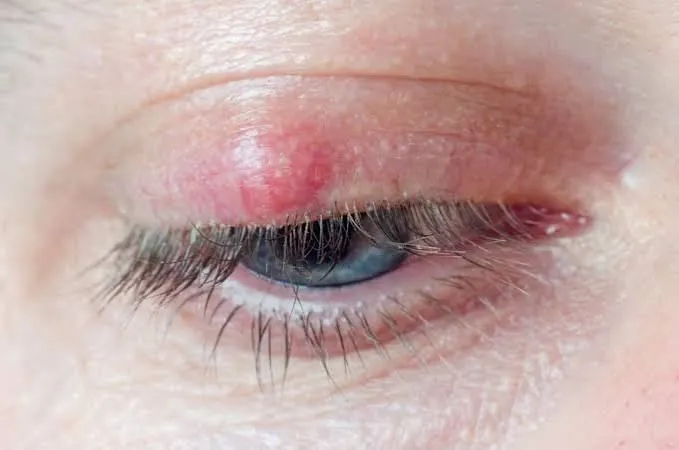
First-line treatment is simple: a warm compress for 5 to 10 minutes, twice a day, followed by gentle massage of the eyelid towards the lashes, for two to four weeks. This thins the oil and helps the gland to empty. An ointment may be prescribed if there is inflammation. If the lump persists beyond one to two months, or if it affects vision or appearance, a small incision at the practice resolves the problem: local anaesthetic, five minutes, incision made from inside the eyelid, with no visible scar.
Stye: a red, painful spot on the edge of the eyelid
A stye is an infection of the follicle of an eyelash, most often caused by staphylococcus. It looks like a small, red, swollen and painful spot located on the edge of the eyelid, at the base of the lashes, sometimes with a white tip. Unlike a chalazion, it hurts to the touch and develops quickly: it drains and heals on its own within one to two weeks.
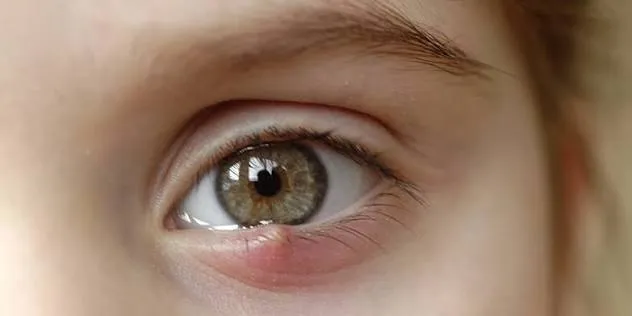
Warm compresses speed up drainage; an antibiotic ointment is sometimes useful. Do not squeeze the stye, and avoid make-up and contact lenses until it has healed. A stye that is not properly treated may leave a residual chalazion.
Cysts and other small lumps
Some lumps are neither a chalazion nor a stye: a cyst of Moll (a small translucent bead on the edge of the eyelid), a cyst of Zeis (yellowish, sebaceous), a milium (a white grain the size of a pinhead), an epidermal cyst or a wart. They are painless, stable and do not go away on their own; if they cause trouble, simple removal at the practice is enough. A small dilated blood vessel or a xanthelasma (a yellow cholesterol plaque at the inner corner) are other common benign causes.
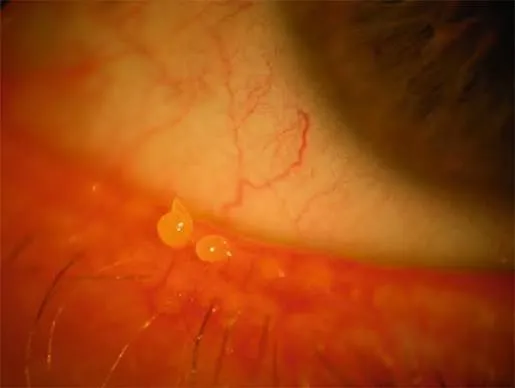
Chalazion, stye or cyst: a table to help you tell them apart
| Chalazion | Stye | Cyst | |
|---|---|---|---|
| Where | Within the thickness of the eyelid, away from the edge | On the edge of the eyelid, at the base of a lash | On the skin or the edge of the eyelid |
| Appearance | Firm, rounded lump, skin often normal or slightly red | Small, red, swollen spot, sometimes with a white tip | Small translucent or yellowish bead, regular in shape |
| Pain | Little or no pain after the first few days | Painful, tender to the touch | Painless |
| Cause | Blocked meibomian gland (not an infection) | Infection of an eyelash follicle (staphylococcus) | Blocked gland of Moll or Zeis, skin cyst |
| Course | A few weeks; may become encysted and persist | Drains and heals in 1 to 2 weeks | Stable, does not go away on its own |
| Treatment | Warmth + massage; incision at the practice if persistent | Warm compresses, hygiene, antibiotic ointment if needed | Simple removal if troublesome |
Signs that should prompt a prompt consultation
A lump on the eyelid is almost always benign, but some signs call for an examination without delay: the whole eyelid red, hot and swollen, with or without fever, which may indicate cellulitis (an infection of the tissues of the eyelid), especially in children; severe pain; a drop in vision; a lump that grows, bleeds, ulcerates, causes lashes to fall out or distorts the edge of the eyelid; or a “chalazion” that keeps coming back in the same place in an adult over 50. In the latter case, examining the removed tissue under the microscope makes it possible to rule out an eyelid tumour, which is rare but can mimic a chalazion.
The practice sees these situations on the same day, without an appointment, Monday to Friday from 8.30am to 7pm. Emergencies are also seen between 1pm and 2pm, with no break.
Why it comes back, and how to prevent it
Recurrent chalazia and styes almost always have an underlying cause: blepharitis (chronic inflammation of the eyelid margins), rosacea, sometimes diabetes or an uncorrected refractive error in a child who rubs their eyes. Regular eyelid hygiene (warmth, massage, cleaning the lash line) clearly reduces recurrences. An assessment at the practice can identify this underlying cause and treat it.