

The chalazion
A chalazion is a small, firm lump in the eyelid, caused by a blocked meibomian gland. Benign but bothersome and sometimes recurrent, it is treated first with local care and, if it persists, with a small incision at the practice.
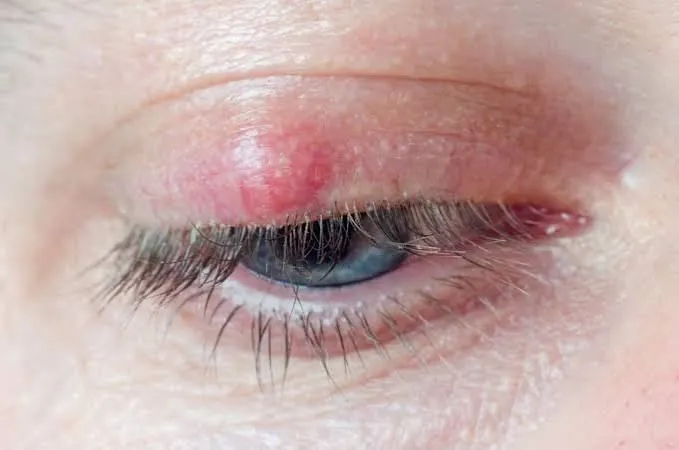
Chalazion: the essentials in 30 seconds
- A small, painless lump on the upper or lower eyelid that persists: it is very probably a chalazion, a blocked and inflamed gland in the eyelid. It is neither serious nor contagious.
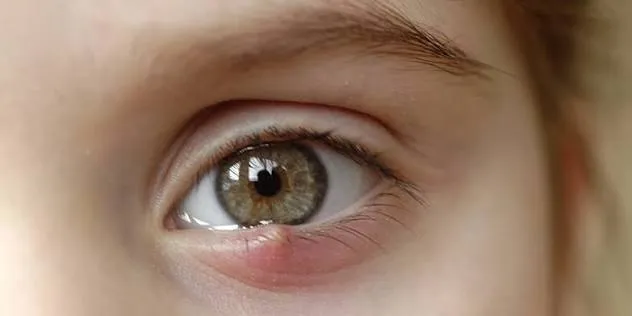
- Chalazion or stye? A stye is a small, painful spot on the edge of the eyelid, at the base of a lash; a chalazion is a deeper lump, often with little pain, which can last for weeks.
- What should you do? Warm compresses for 10 minutes 3 to 4 times a day, then massage: most clear up within a few weeks. Do not burst it.
- Lump that has not gone away after 4 to 6 weeks: see a doctor. A small incision under local anaesthetic, performed at the practice, resolves the problem in a few minutes.
- Not sure whether it is a chalazion, a stye or a cyst? See our page Lump on the eyelid.
What is a chalazion?
The edge of the eyelids contains dozens of meibomian glands, which produce the oily part of the tears. When one of them becomes blocked, the sebum builds up and triggers an encysted inflammatory reaction: this is the chalazion, a small firm lump within the thickness of the eyelid.
It is a benign and common lesion, with no danger to your sight. It should not be confused with the stye, which is an acute, painful infection of an eyelash. The chalazion, by contrast, is mainly bothersome and causes little pain, and it readily occurs in people with blepharitis.
Recognising the symptoms
A chalazion often develops in two stages: an inflammatory phase, then a small nodule that persists. The typical signs are:
Chalazion or stye? A stye is an acute, painful infection at the base of a lash (like a small red spot, often with pus). A chalazion is a non-infected inflammatory cyst of a meibomian gland, deeper and with little pain. A stye that has not fully resolved can also turn into a chalazion.
And what about the stye?
The stye is often confused with the chalazion, but it is a different lesion: an acute infection (most often with staphylococcus) of an eyelash follicle or a small gland on the edge of the eyelid. It appears as a small, red, hot and painful spot on the edge of the eyelid, sometimes with a point of pus.
Why does a chalazion form?
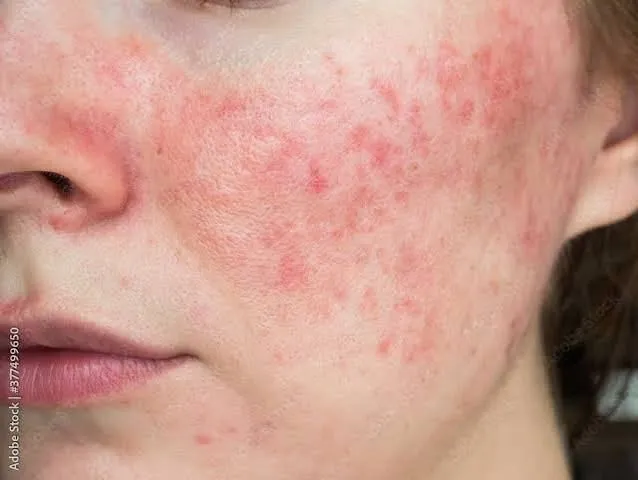
It all starts with a blocked meibomian gland. Certain underlying conditions favour this blockage and explain recurrences:
Diagnosis at the practice
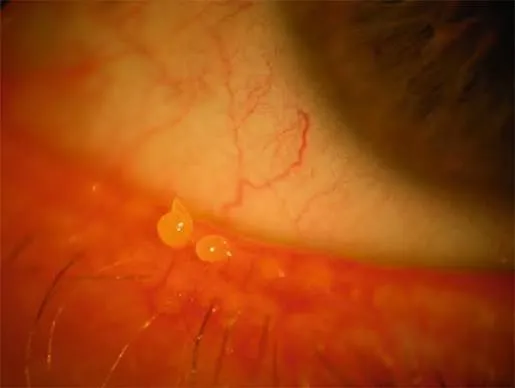
The diagnosis is clinical: a simple examination of the eyelids with a slit-lamp is enough. The consultation also makes it possible to rule out anything that could look like a chalazion:
Treatment, step by step
We always start with local care, which is very effective for most chalazia. Incision is only considered if the chalazion persists.
Your chalazion care routine
Indicative routine provided at the practice — to be adapted to each patient. Does not replace your ophthalmologist's personalised prescription.
The chalazion almost always heals well. Most respond to local care; to prevent recurrences, the underlying blepharitis is treated with regular eyelid hygiene.
Chalazion in Noisy-le-Grand
The Grand Paris Ophtalmologie practice provides diagnosis, medical treatment and incision of chalazia on site, for patients from Noisy-le-Grand and eastern Paris (93, 94, 77): Bry-sur-Marne, Villiers-sur-Marne, Champs-sur-Marne, Chelles, Torcy and Marne-la-Vallée, as well as Le Perreux-sur-Marne, Nogent-sur-Marne, Fontenay-sous-Bois, Vincennes, Saint-Maur-des-Fossés, Créteil, Montreuil and Rosny-sous-Bois. Care is provided by Dr Yaïr Chetrit or Dr Mayer Srour, often in connection with associated blepharitis. A red eye can also be an emergency: red eye: when is it an emergency?
Chalazion: your questions
Answers from Dr Yaïr Chetrit and Dr Mayer Srour, ophthalmologists in Noisy-le-Grand.
Does a lump on the eyelid go away on its own?
Often yes: many regress within a few weeks with warm compresses and massage. Some leave a small painless lump which can be removed with a small incision if it persists.
Small lump on the eyelid: chalazion or stye?
The stye is an acute, painful infection of a lash; the chalazion is a deep, firm inflammatory cyst with little pain. A stye that does not resolve can turn into a chalazion.
Is a chalazion dangerous?
No, it is a benign lesion that does not threaten your sight. A large chalazion can press on the eye and temporarily blur vision. A nodule that keeps coming back in the same place should be checked as a precaution.
Should you burst a chalazion yourself?
Definitely not: you should never try to burst it yourself (risk of infection and scarring). Warm compresses and massage are most often enough; otherwise, the incision is performed at the practice.
How is the incision performed?
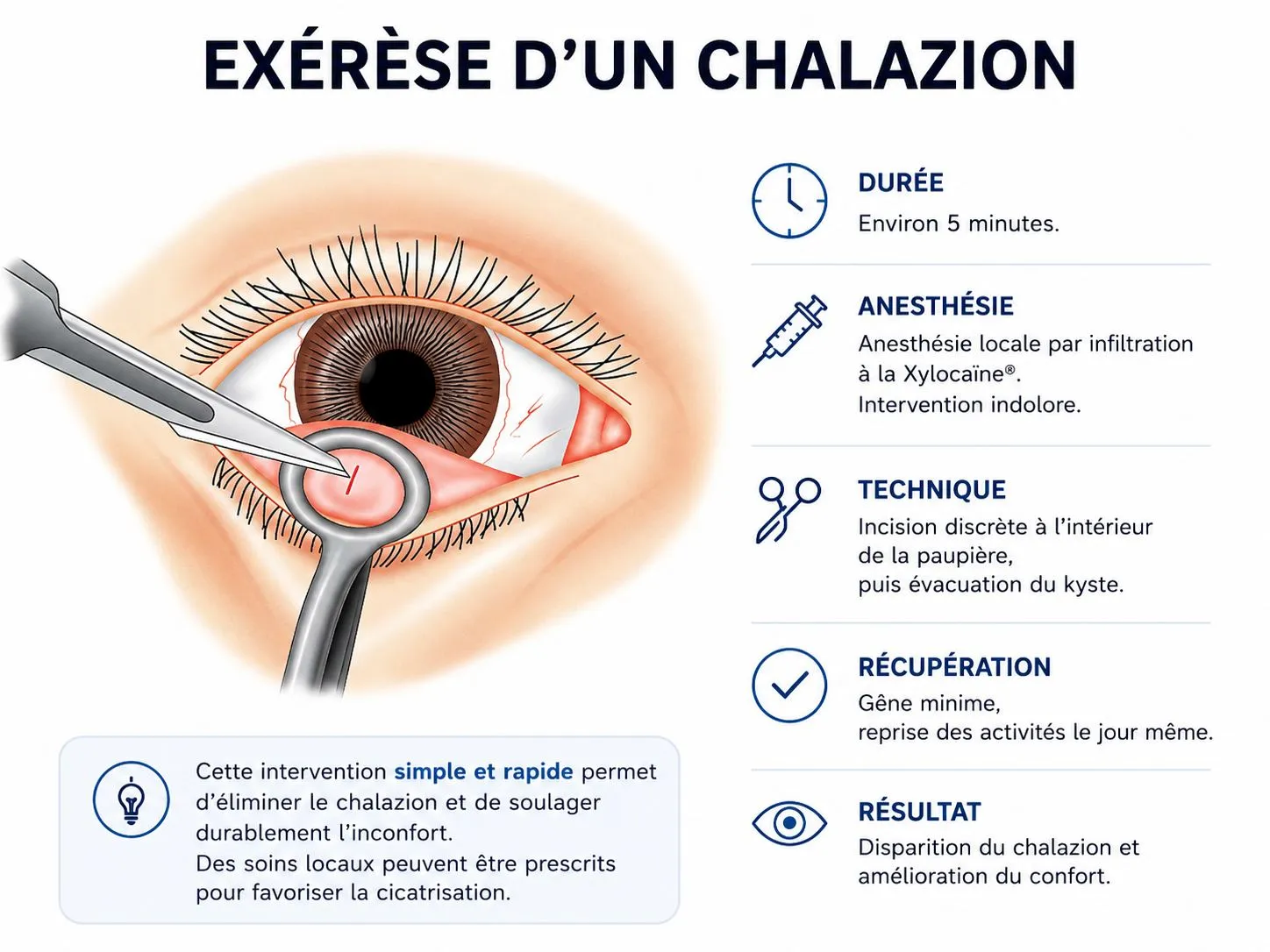
It is a quick procedure at the practice under local anaesthetic: the eyelid is turned over and the chalazion is drained through its inner surface, with no visible scar. An antibiotic ointment is applied over the following days.
Why do I keep getting chalazia?
Most often because of blepharitis or chronic dysfunction of the meibomian glands, sometimes with rosacea. Regular eyelid hygiene clearly reduces recurrences.
How long does a chalazion last?
The inflammatory phase lasts a few days; the nodule may then persist for several weeks. Local care speeds up resolution; beyond that, an incision is considered.
Can I wear make-up or contact lenses?
During a flare-up, it is better to stop wearing contact lenses and make-up along the lash line, as they block the glands. You can resume them once the chalazion has resolved, with good eyelid hygiene.
Lump on the eyelid that won't go away: what should you do?
If the lump persists for more than 4 to 6 weeks despite warm compresses, or if it affects vision or appearance, a consultation is needed. The ophthalmologist will confirm the chalazion and, depending on the case, offer a local injection or a small incision from inside the eyelid, with no visible scar, performed at the practice under local anaesthetic.
Lump under the eyelid: is it always a chalazion?
Most often yes, especially if it is painless and appeared gradually. Other causes exist (cyst, stye, more rarely an eyelid tumour in an older person when the lump keeps coming back in the same place or causes lashes to fall out): this is why a lump that recurs or changes in appearance should be examined.
Related reading
A lump on the eyelid that will not go away?
The Noisy-le-Grand practice diagnoses and treats chalazion — local care and, if needed, a small incision.
The Grand Paris Ophtalmologie practice in Noisy-le-Grand provides consultations, screening and surgery for patients from neighbouring towns: