

The HFA3: the world reference for visual field testing
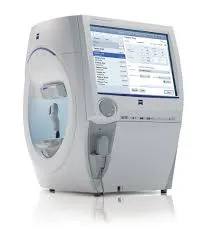
The HFA3 is the perimeter used for the Humphrey visual field test at the practice: it is the international reference instrument for screening and monitoring glaucoma, the one on which the major studies of the disease are based.
What is the HFA3, and what is it used for?
The HFA3 (Humphrey Field Analyzer 3) is an automated perimeter: it maps the sensitivity of your vision point by point, from the centre to the periphery. You look at a central point while small lights of varying intensity appear; you press a button each time you see one.
The device uses this to produce a precise map of your field of vision, and above all to identify areas of reduced sensitivity that you do not notice in daily life, because the brain compensates for them. This is exactly how glaucoma progresses: silently, starting from the periphery.
Why it is a benchmark in its category
The Humphrey is the worldwide standard in perimetry: the major glaucoma studies were carried out with it, and its normative database (comparison with thousands of healthy eyes of the same age) is authoritative. Its results are understood and comparable by all ophthalmologists, in France and abroad.
The HFA3 adds two major advantages: the SITA Faster strategy, which shortens the test to 2-3 minutes per eye without loss of reliability (a real benefit, since fatigue distorts responses), and the GPA (Guided Progression Analysis), which automatically overlays your successive tests to show whether the glaucoma is progressing or remaining stable.
When the practice uses it
What it means for you
The HFA3: your questions
Answers from Dr Yaïr Chetrit and Dr Mayer Srour, ophthalmologists in Noisy-le-Grand.
Is it serious if I cannot see all the points?
No, this is intentional: the device presents increasingly faint points, up to the limit of your perception. Nobody sees all the points.
How long does the test take?
With SITA Faster, 2 to 3 minutes per eye, or about ten minutes in total including set-up.
Why repeat the visual field test regularly?
Because glaucoma progresses without symptoms: only by comparing successive tests (GPA analysis) can we check that treatment is keeping the disease stable.
Related reading
Have you been prescribed a visual field test?
The HFA3 is installed at the Noisy-le-Grand practice: test and interpretation on site, with no additional travel.
The Grand Paris Ophtalmologie practice in Noisy-le-Grand provides consultations, screening and surgery for patients from neighbouring towns: