

Conjunctivitis
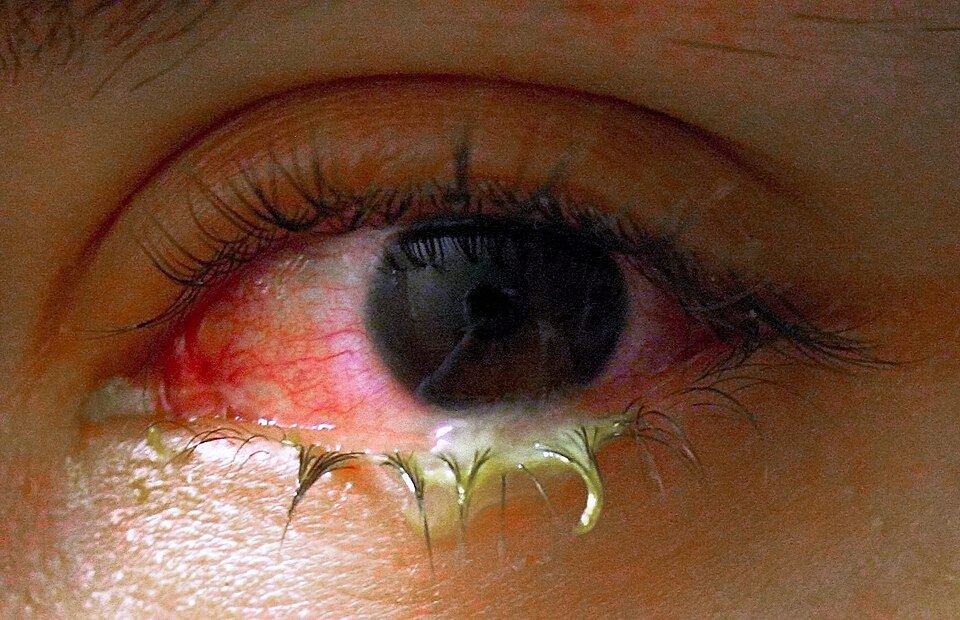
Conjunctivitis is an inflammation of the conjunctiva, the membrane covering the white of the eye: a red eye that itches, waters or sticks shut. Usually mild, it can be viral, bacterial or allergic — and some signs call for prompt advice.
Conjunctivitis: the essentials in 30 seconds
- A red eye that itches, waters or sticks shut in the morning: this is the typical picture of conjunctivitis, an inflammation of the membrane covering the white of the eye.
- Is it contagious? Viral and bacterial forms are (hands, towels); allergic conjunctivitis is not.
- How long does it last? 1 to 2 weeks for a viral form, a few days with treatment for a bacterial form; allergic conjunctivitis lasts as long as the allergen is present.
- When should you be seen quickly? Pain, reduced vision, marked sensitivity to light, contact lens wear, a newborn: it may not be simple conjunctivitis. Emergencies are seen the same day at the practice.
What is conjunctivitis?
The conjunctiva is the thin, transparent membrane lining the white of the eye and the inside of the eyelids. Richly supplied with blood vessels, it turns red as soon as it becomes inflamed: this is conjunctivitis, one of the leading causes of red eye.
It is usually mild and heals well, but not every red eye is conjunctivitis: pain, reduced vision or marked sensitivity to light should prompt a check for something more serious. The purpose of the examination is precisely to tell the difference and identify the cause.
Recognising the symptoms
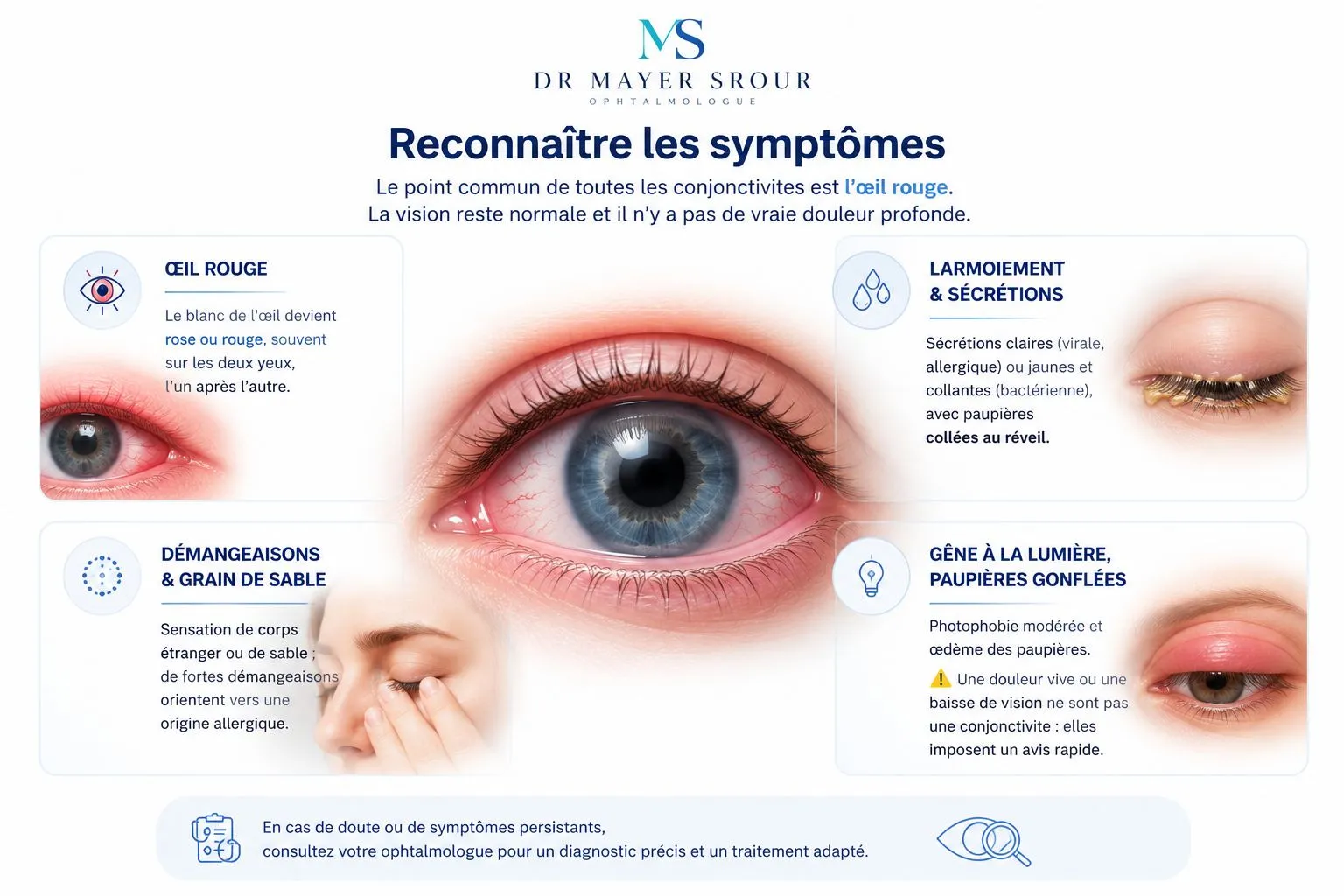
What all conjunctivitis has in common is a red eye. Vision remains normal and there is no real deep pain:
The three main types of conjunctivitis
Their treatment is very different: the key is to identify the cause. A few clues help, but only an examination can be certain.
In children and teenagers, a severe allergic form — vernal keratoconjunctivitis — can affect the cornea and requires specialist follow-up. See the detailed section below.
Focus: vernal keratoconjunctivitis
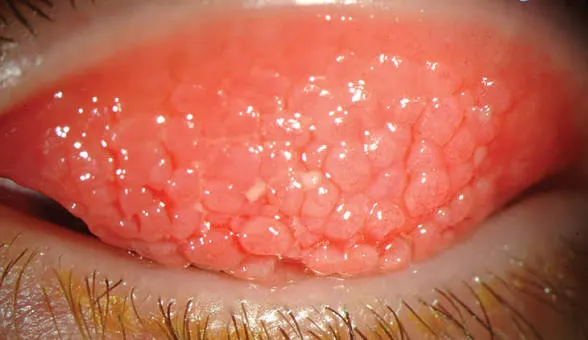
Vernal keratoconjunctivitis (also called spring catarrh) is a chronic and severe form of eye allergy, affecting mainly boys between 5 and 15, often with a family history of allergy. It comes in flare-ups, classically in spring and summer, and most often settles at puberty.
The word “kerato” signals its danger: beyond the conjunctiva, it can affect the cornea and threaten vision. It therefore calls for close ophthalmological follow-up, distinct from simple seasonal allergic conjunctivitis.
Consultation & warning signs
The diagnosis is clinical: the slit-lamp examination determines the type of conjunctivitis and, above all, rules out a more serious cause of red eye. Certain signs should prompt you to be seen quickly:
The practice sees eye emergencies without an appointment, Monday to Friday. If you have a red eye with any of these signs, it is best to be seen the same day.
Treatments, depending on the cause
There is no single treatment for conjunctivitis: it depends on its origin. An antibiotic eye drop, for example, is useless for viral or allergic conjunctivitis.
The vast majority of cases of conjunctivitis heal without after-effects. The right approach: identify the cause for targeted treatment, and seek advice if the red eye comes with pain or reduced vision, or occurs while wearing contact lenses.
Conjunctivitis in Noisy-le-Grand
The Grand Paris Ophtalmologie practice treats conjunctivitis and red eye on site, with emergency walk-in appointments Monday to Friday, for patients from Noisy-le-Grand and eastern Paris (93, 94, 77): Bry-sur-Marne, Villiers-sur-Marne, Champs-sur-Marne, Chelles, Torcy and Marne-la-Vallée, as well as Le Perreux-sur-Marne, Nogent-sur-Marne, Fontenay-sous-Bois, Vincennes, Saint-Maur-des-Fossés, Créteil, Montreuil and Rosny-sous-Bois. Diagnosis and treatment by Dr Yaïr Chetrit or Dr Mayer Srour. A red eye can also be an emergency: red eye: when is it an emergency?
Conjunctivitis: your questions
Answers from Dr Yaïr Chetrit and Dr Mayer Srour, ophthalmologists in Noisy-le-Grand.
Is conjunctivitis contagious?
Viral and bacterial forms are, especially the viral form, which spreads very easily via the hands. Washing your hands, not rubbing your eyes and using your own towel limit contagion. The allergic form is not contagious.
How long does conjunctivitis last?
The viral form heals in 1 to 2 weeks, the bacterial form in a few days with antibiotic eye drops. The allergic form lasts as long as exposure to the allergen continues.
Do you always need antibiotic eye drops?
No: antibiotics only work on the bacterial form. They are useless for viral or allergic conjunctivitis. This is the whole value of an accurate diagnosis.
Can I wear contact lenses?
No: you should stop wearing contact lenses throughout the conjunctivitis and only resume once it has healed, with a clean case and clean lenses. A red eye while wearing contact lenses should always be checked.
How can you tell the three types apart?
The viral type waters a lot (often after a cold), the bacterial type sticks the eyelids together with yellow discharge, and the allergic type itches intensely in both eyes. Only an examination can be certain.
When should you seek emergency care?
If you have significant pain, reduced vision, marked sensitivity to light, a red eye while wearing contact lenses or after an injury. The practice sees emergencies without an appointment, Monday to Friday.
Spring (vernal) conjunctivitis: what is it?
A severe eye allergy of children and teenagers, often occurring in spring, with intense itching and photophobia. It can affect the cornea and requires specialist follow-up.
Can conjunctivitis damage eyesight?
The vast majority heal without after-effects. The risk comes from severe forms or from red eyes wrongly taken for conjunctivitis: hence the value of seeking advice if in doubt.
Allergic conjunctivitis: what should I do?
Avoid the allergen where possible, rinse the eyes with saline, apply cold compresses and use an antihistamine or anti-allergy eye drop prescribed by your ophthalmologist. Do not rub your eyes, as this makes the itching worse. If there is associated rhinitis, an oral antihistamine may be offered.
Conjunctivitis or another cause of red eye?
A red eye without pain or reduced vision and with discharge is most often conjunctivitis. A painful red eye, with blurred vision or marked sensitivity to light, suggests keratitis, uveitis or acute glaucoma: you need to be seen quickly.
Related reading
A red eye that worries you?
The Noisy-le-Grand practice sees eye emergencies without an appointment, Monday to Friday.
The Grand Paris Ophtalmologie practice in Noisy-le-Grand provides consultations, screening and surgery for patients from neighbouring towns: