

Glaucoma: the silent disease of the optic nerve
Glaucoma damages the optic nerve without pain or symptoms for years: only regular screening (eye pressure, OCT, visual field) can detect it in time. It is effectively treated with eye drops or SLT laser, carried out at the practice. Screening is recommended every 2 to 3 years from the age of 40.
Glaucoma narrows the visual field without pain or symptoms, for years. Only an examination by an ophthalmologist detects it. At the Noisy-le-Grand practice, Dr Yaïr Chetrit and Dr Mayer Srour provide screening, treatment and follow-up — eye drops and lasers on site.
Glaucoma: the essentials in 30 seconds
- Glaucoma screening from age 40: a painless 20 to 30 minute examination at the practice (eye pressure, corneal thickness, optic nerve, OCT, visual field if needed). Glaucoma cannot be cured, but detected early it can be very well controlled.
- Glaucoma causes no symptoms for years: it destroys the optic nerve silently. Lost vision cannot be recovered.
- Screening from age 40: a consultation every 2 to 3 years, earlier and more often if there is glaucoma in the family, high myopia or diabetes.
- The screening examination: measurement of eye pressure, examination of the optic nerve, RNFL OCT and, if needed, visual field testing. Painless, carried out on site in a single consultation.
- Detected early, it can be very well controlled: eye drops, SLT laser or surgery stabilise the disease and protect sight for life.
What is glaucoma?
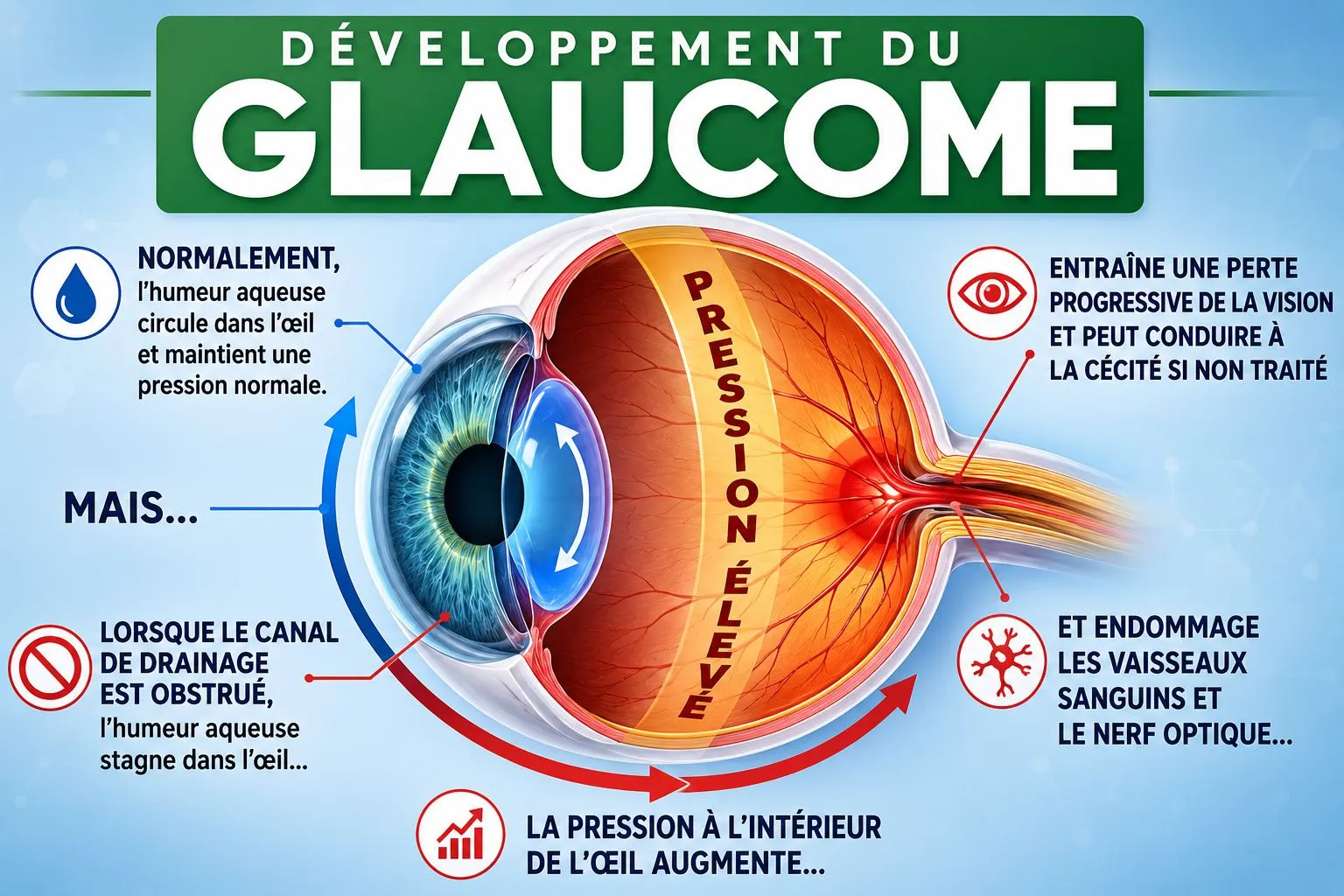
The eye continuously produces a fluid, the aqueous humour, which drains out through a natural filter called the trabecular meshwork. When this drainage is poor, pressure rises in the eye and gradually damages the optic nerve — the cable that carries images to the brain.
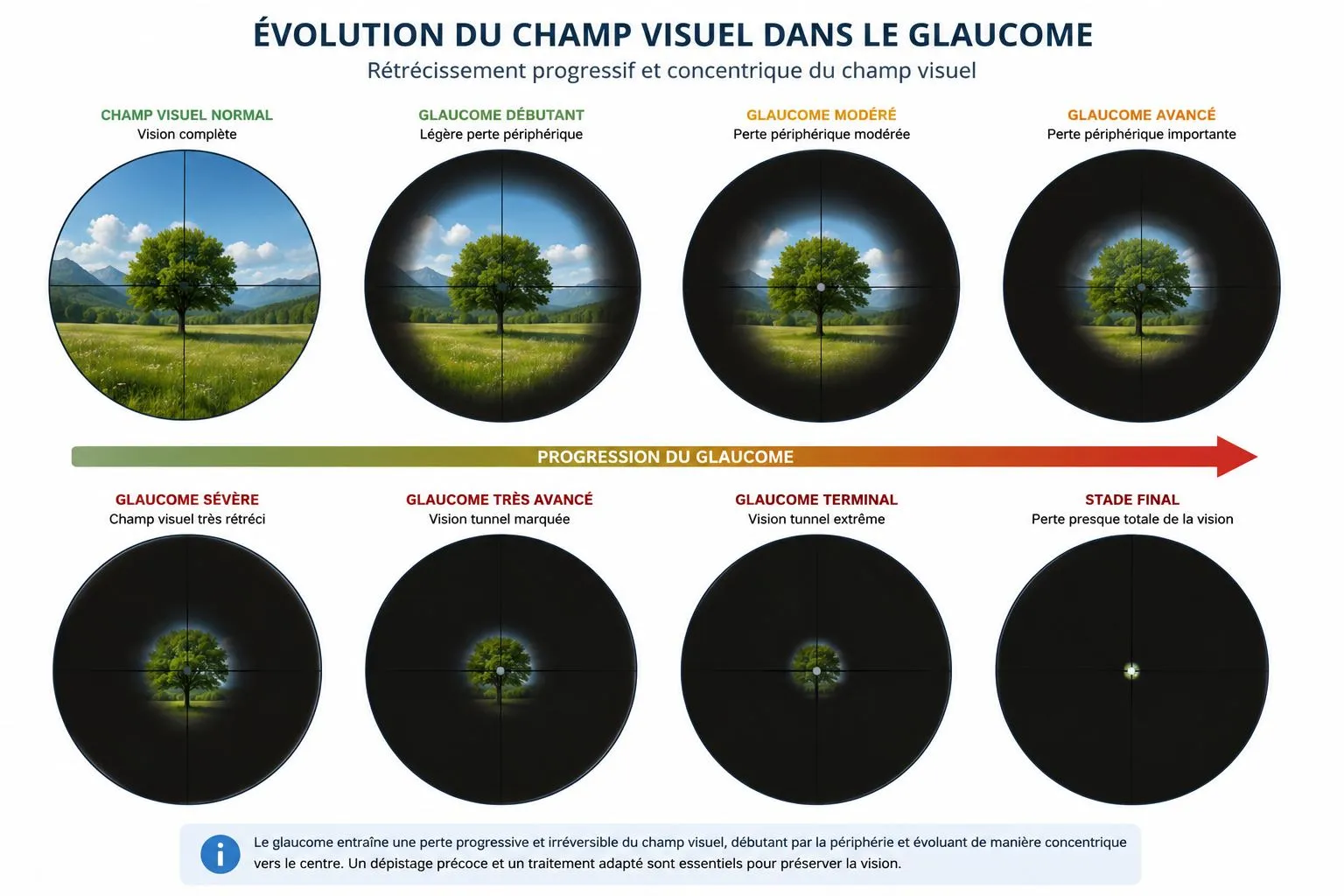
The result: the visual field narrows insidiously, from the periphery towards the centre. A telling image: glaucoma does not make the page of a book blurry — it first hides the edges of the page, then moves towards the centre. The patient does not notice, because the brain compensates for a long time. It is nicknamed the “silent thief of sight”.
There is not one glaucoma, but several
Screening: three key examinations, all at the practice
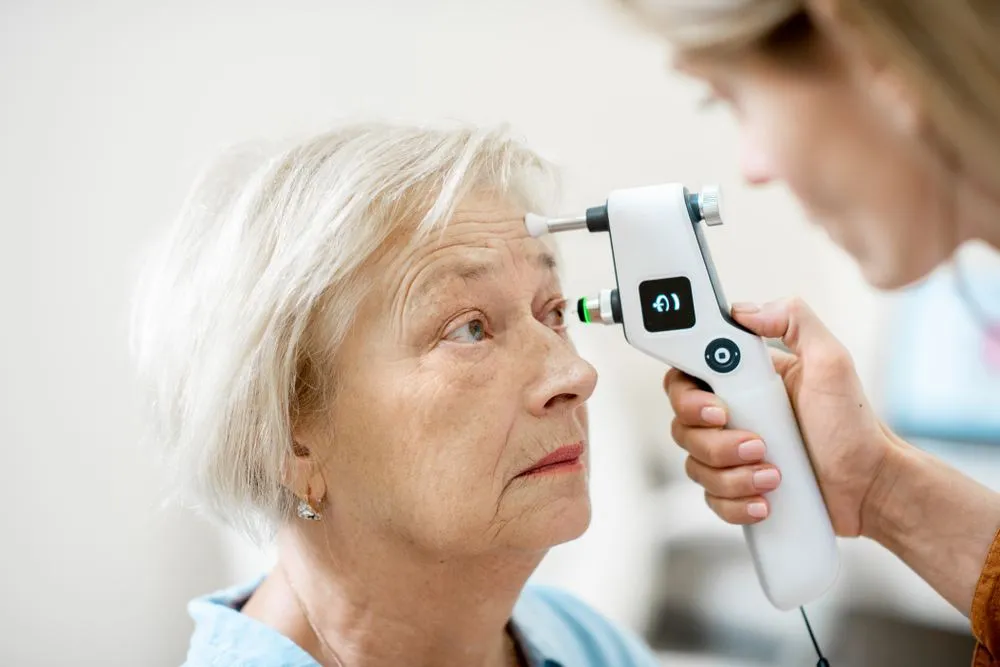
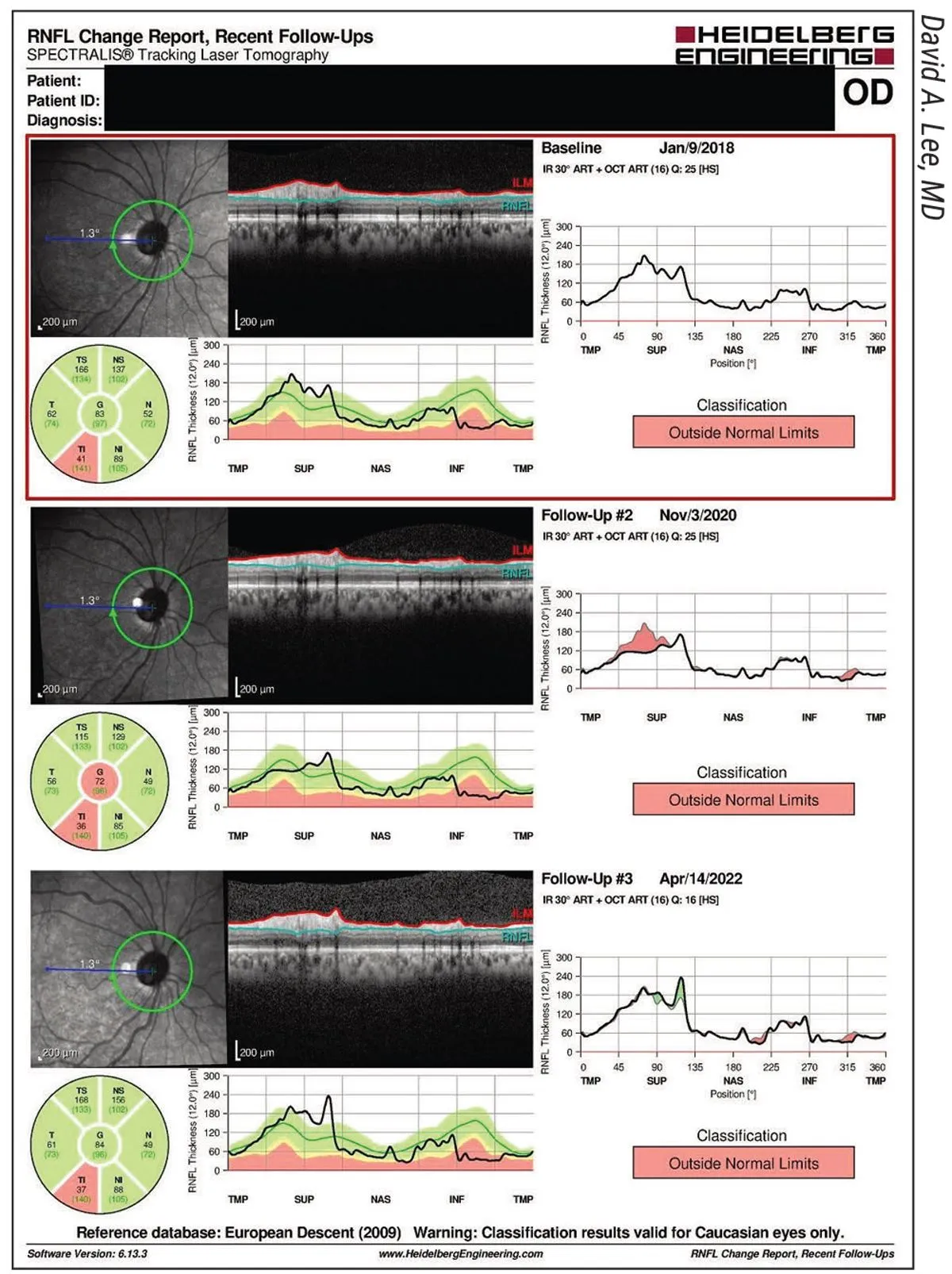
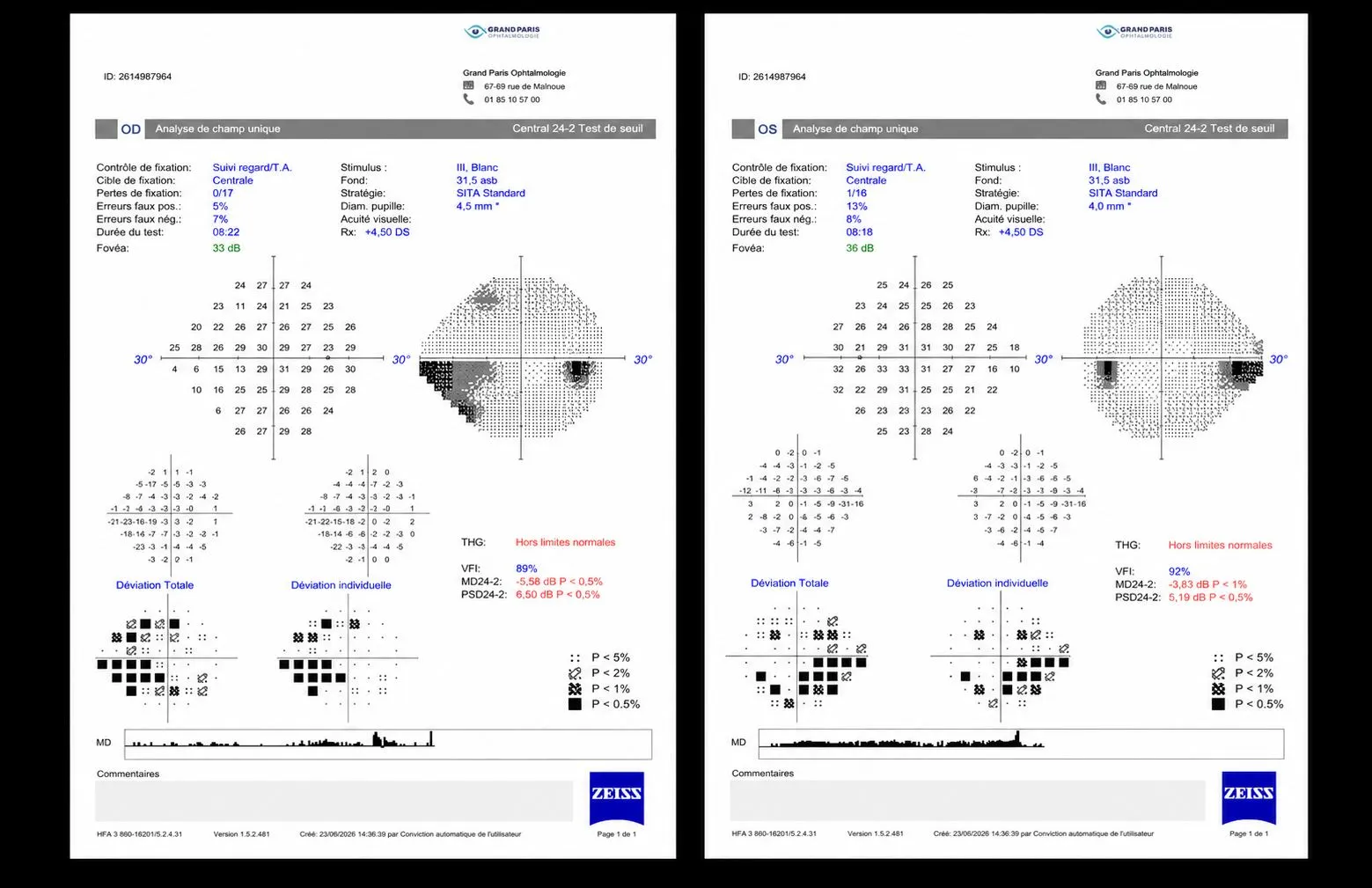
A check-up is recommended from age 40, earlier if there are risk factors: family history, high myopia, diabetes, African or Caribbean origin, prolonged corticosteroid treatment. All these examinations are carried out on the practice's equipment.
Treatments: lowering pressure, preserving vision
Destroyed fibres do not regenerate — but the progression can be stopped by lowering eye pressure:
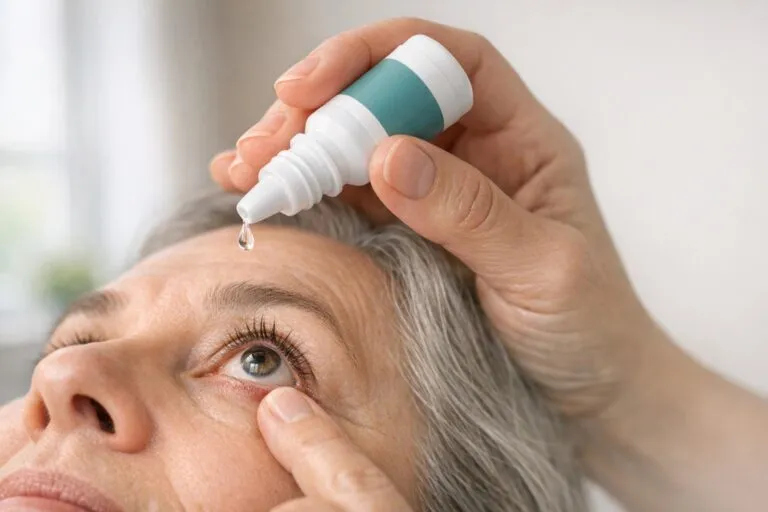
One to two drops a day, for life, to reduce the production of aqueous humour or improve its drainage — preferably preservative-free formulations, which are better tolerated. Because the disease is silent, the temptation to stop is strong: yet stopping makes the pressure rise again within a few days. Regularity is essential.
Selective trabeculoplasty stimulates the trabecular meshwork to improve drainage: a painless session of a few minutes, effective in the majority of patients (pressure reduction of 20 to 30%), repeatable because it leaves no scarring, recommended as first-line treatment by the European Glaucoma Society. It can reduce or even replace eye drops.
Discover the laser equipmentIf the disease progresses despite eye drops and laser, filtering surgery is performed in a partner clinic, with follow-up at the practice.
Acute glaucoma: a major emergency
Not to be confused with chronic glaucoma: in an anatomically predisposed eye (narrow angle), drainage suddenly blocks. Pressure rises very quickly: intense pain, a red, hard eye, reduced vision, nausea.
Seek care immediately — the practice sees emergencies on the same day. As prevention in patients with a narrow angle, a peripheral iridotomy with YAG laser is performed at the practice: it creates a micro-opening in the iris that protects against an attack.
Our protocols follow official recommendations
Screening, monitoring and treatments at the practice comply with current French guidelines.
In 2 lines: the HAS recommends targeted glaucoma screening in people at risk from age 40 — the complete ophthalmological examination remaining the reference for early diagnosis.
Read on has-sante.fr.
In 2 lines: only lowering intraocular pressure slows the disease — with eye drops or SLT laser first, surgery if these fail. Lifelong follow-up (pressure, OCT, visual field) adapts treatment to each patient's progression.
View the full document (PDF).
The official information sheet from the French national health insurance (Assurance Maladie) for patients: understanding the disease, its screening and its management. Read on ameli.fr.
Official factsheets from the Société Française d'Ophtalmologie
Written by SFO experts, they describe how each procedure is carried out, and its benefits and risks. Please read them before your consultation.
Glaucoma screening and follow-up in Noisy-le-Grand
The Grand Paris Ophtalmologie practice provides glaucoma screening, treatment and follow-up for patients from Noisy-le-Grand and east Paris (93, 94, 77): Bry-sur-Marne, Villiers-sur-Marne, Champs-sur-Marne, Neuilly-sur-Marne, Gournay-sur-Marne, Noisiel, Torcy, Chelles, Gagny and Marne-la-Vallée, as well as Le Perreux-sur-Marne, Nogent-sur-Marne, Fontenay-sous-Bois, Vincennes, Saint-Maur-des-Fossés, Créteil and Montreuil.
Eye pressure, optic nerve OCT, visual field testing and SLT and YAG lasers are carried out on site, on the practice's equipment, by Dr Yaïr Chetrit and Dr Mayer Srour.
Glaucoma: your questions
Answers from Dr Yaïr Chetrit and Dr Mayer Srour, ophthalmologists in Noisy-le-Grand.
What are the symptoms of glaucoma?
None for years: no pain, no red eye, no loss of vision at first. The visual field narrows so gradually that the brain compensates. Only an examination by an ophthalmologist detects it.
Can glaucoma be cured?
No — destroyed fibres do not regenerate. But detected early, it can be very well controlled: eye drops, SLT laser or surgery stabilise the disease and preserve the visual field for life.
Glaucoma screening at 40: what does the examination involve?
It takes a single consultation and is painless: measurement of eye pressure, measurement of corneal thickness, examination of the angle and optic nerve at the back of the eye, RNFL OCT to measure the optic nerve fibres and, if there is any doubt, a visual field test. Everything takes 20 to 30 minutes at the practice.
Is glaucoma hereditary?
The family component is strong: with a first-degree relative affected, your risk is multiplied by 4 to 9. If a member of your family has glaucoma, get screened without waiting until 40.
How does the optic nerve OCT work?
It is a “scan” of the optic nerve: painless, contactless, 5 minutes, carried out at the practice, often without dilation. It measures the thickness of the nerve fibres and allows precise monitoring of progression.
Are eye drops really for life?
Glaucoma is a chronic disease: treatment is long-term, and regularity is essential. However, SLT laser can reduce the number of eye drops, or even replace them in some patients.
What is acute glaucoma?
A major emergency: sudden blockage of drainage in a predisposed eye — intense pain, a red, hard eye, reduced vision. Seek care immediately. As prevention, YAG laser iridotomy is performed at the practice.
High eye pressure = glaucoma?
Not necessarily: this is called ocular hypertension without optic nerve damage. It warrants closer monitoring (OCT, visual field) so that treatment can start at the first signs of damage. Conversely, there are normal-tension glaucomas.
Is follow-up reimbursed?
Yes: consultations, OCT, visual field tests, eye drops and lasers are procedures covered by the French national health insurance (Assurance Maladie).
How often should screening be repeated?
With no risk factors: every 2 to 3 years from age 40, then every year after 60. With a family history, high myopia, diabetes or borderline eye pressure: every year.
Related reading
Over 40? Have your eye pressure checked.
A simple, painless screening, in a single consultation at the Noisy-le-Grand practice.
The Grand Paris Ophtalmologie practice in Noisy-le-Grand provides consultations, screening and surgery for patients from neighbouring towns: