

Central serous chorioretinopathy
Fluid builds up under the macula and lifts the retina: central vision becomes blurred and distorted, often in one eye only. CSCR mainly affects active men aged 30 to 50, often under stress. At the Noisy-le-Grand practice, Dr Mayer Srour and Dr Yaïr Chetrit provide diagnosis by imaging and treatment, including photodynamic therapy (PDT) with Visudyne.
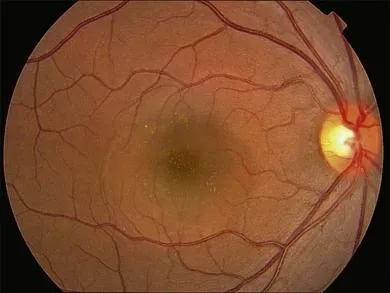
CSCR: the essentials in 30 seconds
- Mainly affects men aged 30 to 50; stress and cortisone (in all forms) are the classic factors.
- A pocket of fluid forms under the retina: distorted, darkened vision, shrunken images.
- Spontaneous recovery in most cases within a few weeks to a few months.
- If the fluid persists: laser treatment or photodynamic therapy — hence the importance of OCT follow-up.
What is CSCR?
In central serous chorioretinopathy, fluid builds up under the macula — the central zone of the retina, responsible for fine vision. The retina then lifts like a small “blister”, and central vision becomes blurred and distorted, most often in one eye only.
The fluid comes from the choroid (the vascular layer beneath the retina), which is too permeable, and passes through the barrier that should normally hold it back. CSCR mainly affects active men aged 30 to 50.
Symptoms & contributing factors
The problem usually appears fairly suddenly, in one eye:
Contributing factors: stress and a “hyperactive” personality, and above all taking corticosteroids in any form (tablets, creams, injections, nasal sprays). Mentioning them and stopping them when possible is part of the treatment.
Diagnosis, by imaging
The diagnosis is painless and relies on imaging of the macula, carried out at the practice:
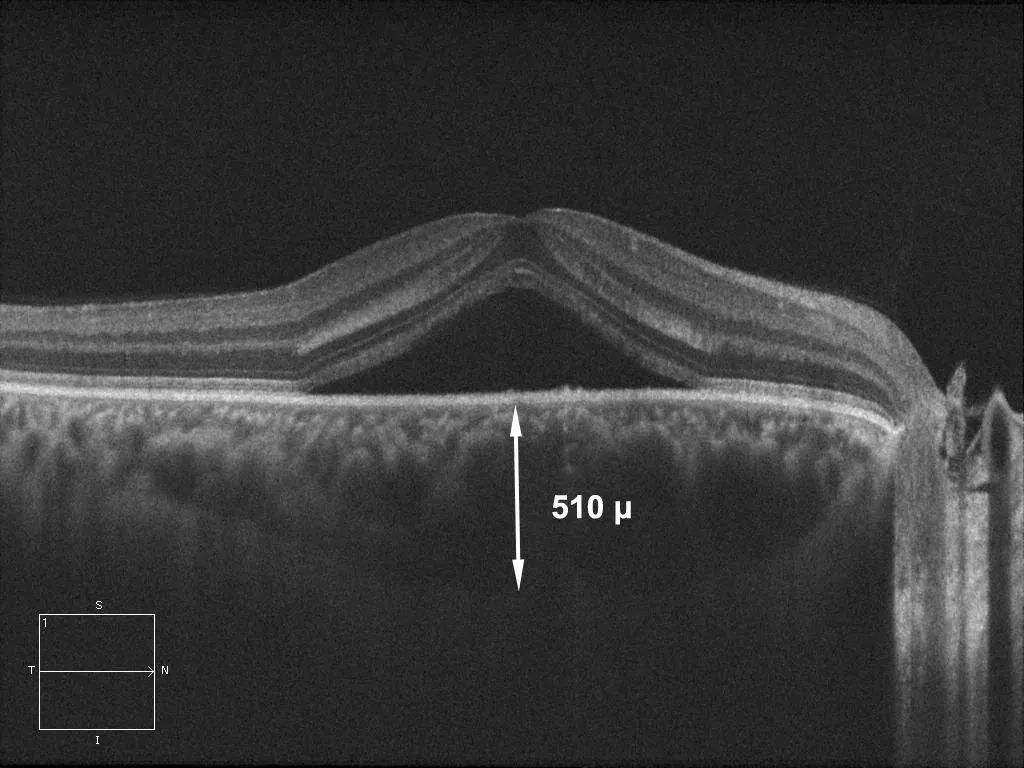
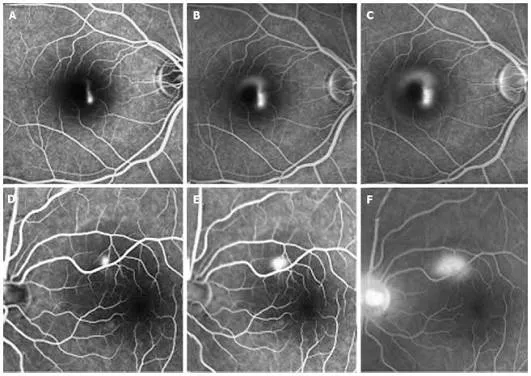
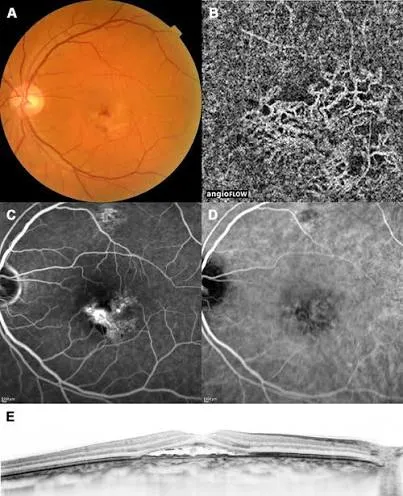
Treatment: monitoring, argon laser on the leak point or Visudyne PDT
In its acute form, CSCR resolves spontaneously within a few weeks to a few months in most cases: we then simply monitor by OCT, reduce stress and stop corticosteroids. Treatment is offered when the fluid persists (chronic form) or recurs, to protect the macula.
Photodynamic therapy (PDT) with Visudyne
PDT is the reference treatment for chronic or recurrent CSCR. A photosensitising drug — verteporfin (Visudyne) — is injected into the arm and binds to the abnormal vessels of the choroid. The drug is then activated by a gentle, non-thermal laser applied to the area concerned: this “seals” the leak and dries up the fluid, without burning the retina.
Argon or micropulse laser
When the leak point is well localised and away from the centre, an argon laser aimed at that point may be enough to stop the leak; a micropulse laser (non-destructive) is also possible. The choice between monitoring, laser and PDT is made after the complete imaging assessment, carried out at the practice by Dr Mayer Srour and Dr Yaïr Chetrit.
Anti-VEGF injections
If CSCR is complicated by choroidal neovessels (detected by OCT angiography), anti-VEGF intravitreal injections are added, which make these abnormal vessels regress — sometimes in combination with PDT.
CSCR: good habits
Tablets, creams, injections, sprays: tell your doctor if you take them — corticosteroids promote CSCR.
Stress is a key factor: reducing the pressure often helps CSCR to regress.
The acute form often heals on its own: OCT follow-up checks that the fluid is clearing properly.
For chronic or recurrent forms, Visudyne PDT or a targeted argon laser can dry up the leak and protect the macula.
Official factsheets from the Société Française d'Ophtalmologie
To find out more: the official SFO information sheets on angiography and photodynamic therapy. Worth reading before your examination or treatment.
CSCR in Noisy-le-Grand
The Grand Paris Ophtalmologie practice provides diagnosis and treatment of central serous chorioretinopathy, including Visudyne PDT, argon laser and intravitreal injections (IVT), for patients from Noisy-le-Grand and eastern Paris (93, 94, 77): Bry-sur-Marne, Villiers-sur-Marne, Champs-sur-Marne, Neuilly-sur-Marne, Gournay-sur-Marne, Noisiel, Torcy, Chelles, Gagny, Marne-la-Vallée, but also Le Perreux-sur-Marne, Nogent-sur-Marne, Vincennes, Saint-Maur-des-Fossés, Créteil, Rosny-sous-Bois and Montreuil.
Dr Mayer Srour, trained at the CHI de Créteil and a specialist in medical retina, provides the imaging assessment and photodynamic therapy, in liaison with your GP (médecin traitant).
CSCR: your questions
Answers from Dr Mayer Srour and Dr Yaïr Chetrit, ophthalmologists in Noisy-le-Grand.
What is CSCR?
A condition in which fluid builds up under the macula and lifts the central retina. Central vision becomes blurred and distorted, often in one eye only. It mainly affects active men aged 30 to 50.
What are the symptoms?
A central spot or veil, wavy lines, objects that look smaller and dulled colours — in one eye only. Peripheral vision remains normal.
Is CSCR linked to stress?
Yes, stress and a hyperactive personality are contributing factors, as are corticosteroids. Reducing them is part of the management.
Does CSCR heal on its own?
In its acute form, it most often resolves spontaneously within a few weeks to a few months. It is then monitored by OCT.
How is it diagnosed?
By OCT (which shows the serous detachment), OCT angiography and angiography, which locate the leak point and rule out other causes.
What is Visudyne PDT?
The reference treatment for chronic forms: a drug (verteporfin, Visudyne) is injected and activated by a gentle, non-thermal laser, which seals the leak and dries up the fluid without burning the retina.
Does Dr Srour perform PDT?
Yes, Dr Mayer Srour performs Visudyne photodynamic therapy for chronic or recurrent CSCR, after a complete imaging assessment.
Can CSCR come back?
Yes, in the same eye or the other, particularly with stress or a renewed course of corticosteroids. OCT follow-up allows it to be treated in time.
Related reading
Distorted central vision? Have an OCT.
Diagnosis and treatment of CSCR, including Visudyne PDT, at the Noisy-le-Grand practice.
The Grand Paris Ophtalmologie practice in Noisy-le-Grand provides consultations, screening and surgery for patients from neighbouring towns: