

Blepharitis
Blepharitis is a chronic inflammation of the edge of the eyelids: redness, itching, crusts at the base of the lashes. Uncomfortable and recurrent, it is closely linked to dry eye — but it is very well controlled with appropriate care.
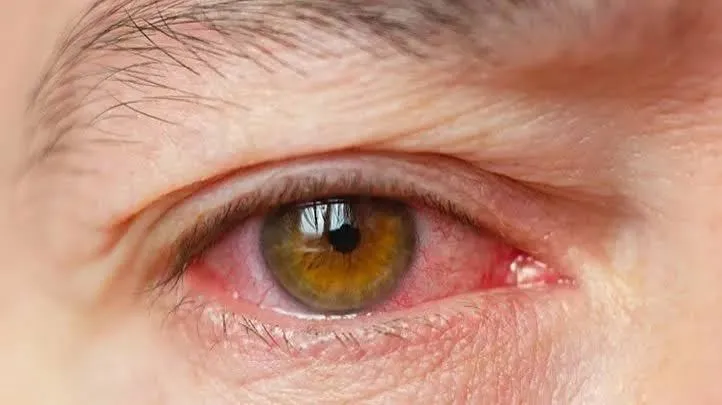
Blepharitis: the essentials in 30 seconds
- Contagious? No. It is an inflammation of the edge of the eyelids, not an infection that can be passed on.
- Symptoms: red, itchy eyelids, lashes that itch or stick together on waking, crusts at the base of the lashes.
- Treatment: warmth, massage and cleaning of the eyelid margin every day. Improvement generally appears within 2 to 4 weeks.
- Duration: it is a chronic condition that comes in flare-ups. If it does not clear up despite care, an assessment at the practice makes it possible to adapt the treatment.
What is blepharitis?
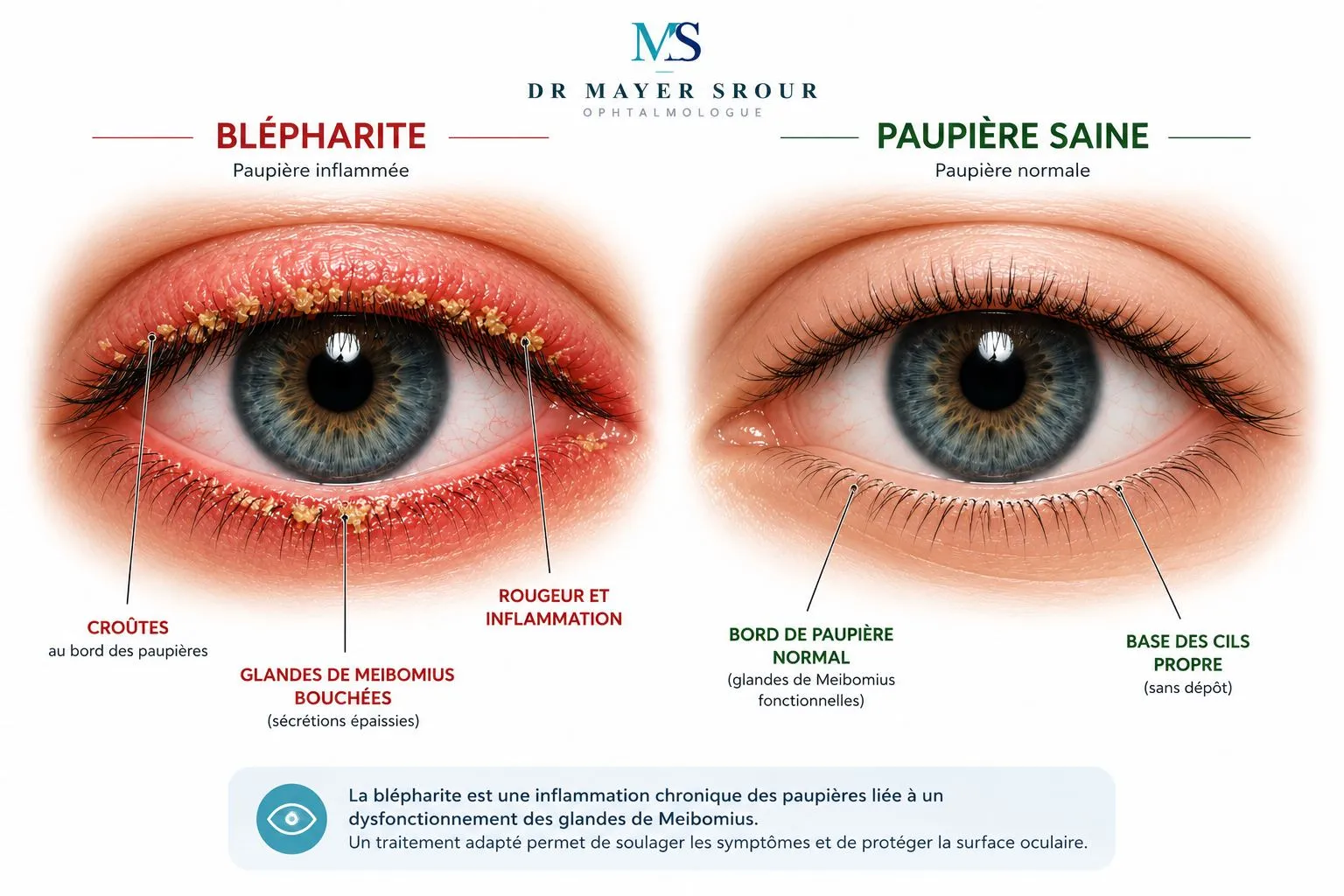
Blepharitis is an inflammation of the free edge of the eyelids — the fine margin where the lashes grow and where the meibomian glands open, which produce the oily part of the tears. It is one of the most frequent reasons for consulting an ophthalmologist.
In broad terms, a distinction is made between anterior blepharitis (base of the lashes, with crusts and flakes) and posterior blepharitis, linked to meibomian gland dysfunction. The two forms often coexist and perpetuate dry eye. It is a chronic condition, which comes in flare-ups but is very well controlled.
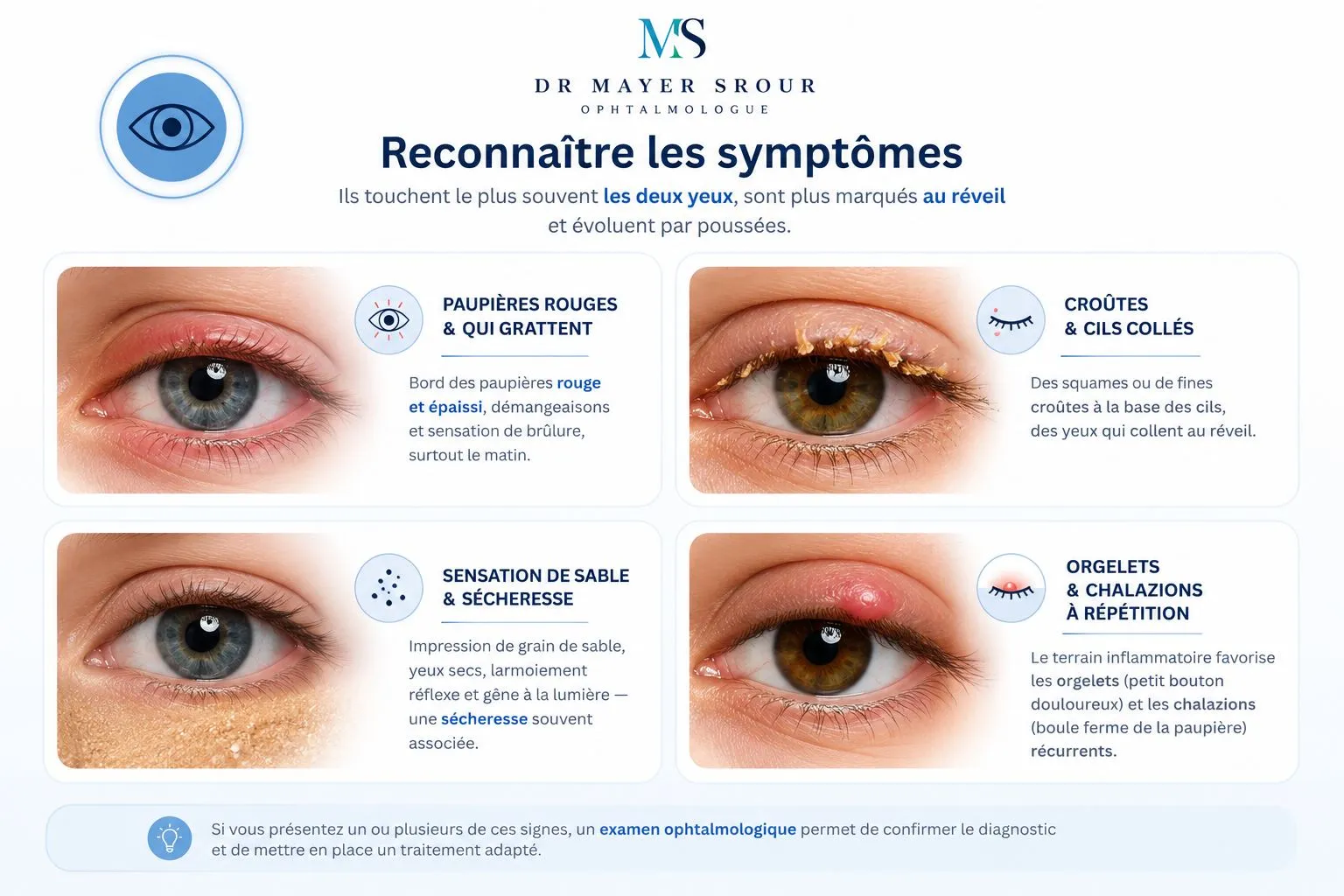
Recognising the symptoms
They most often affect both eyes, are worse on waking and come in flare-ups:
Where does blepharitis come from?
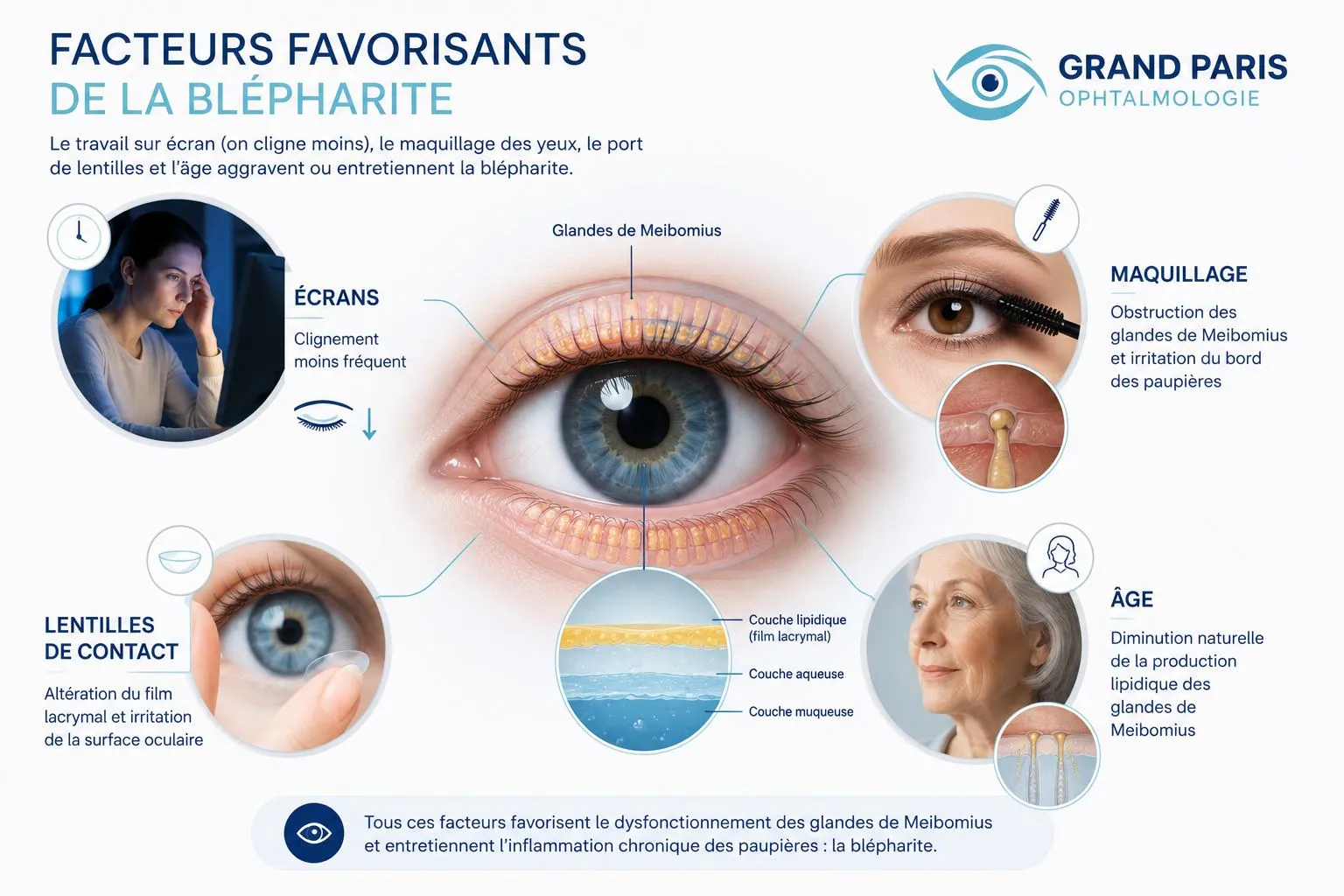
It often results from several factors combined. Identifying the underlying cause makes it easier to control:

Diagnosis at the practice
The diagnosis is clinical: it is based on examining the eyelids with the slit-lamp. In a single consultation, the type of blepharitis and its impact are determined:
Treatments
Blepharitis cannot be cured for good, but it is very well controlled. The key is regular eyelid hygiene, kept up over the long term even between flare-ups.
Your eyelid care routine
Indicative routine provided at the practice — to be adapted to each patient. Does not replace your ophthalmologist's personalised prescription.
Blepharitis is managed through regularity. It is a chronic condition: eyelid hygiene, kept up even when you feel better, spaces out flare-ups and keeps your eyes comfortable day to day.
Blepharitis in Noisy-le-Grand
The Grand Paris Ophtalmologie practice provides diagnosis and management of blepharitis on site, for patients from Noisy-le-Grand and eastern Paris (93, 94, 77): Bry-sur-Marne, Villiers-sur-Marne, Champs-sur-Marne, Chelles, Torcy and Marne-la-Vallée, as well as Le Perreux-sur-Marne, Nogent-sur-Marne, Fontenay-sous-Bois, Vincennes, Saint-Maur-des-Fossés, Créteil, Montreuil and Rosny-sous-Bois. Care is provided by Dr Yaïr Chetrit or Dr Mayer Srour, often in connection with associated dry eye. A red eye can also be an emergency: red eye: when is it an emergency?
Blepharitis: your questions answered
Answers from Dr Yaïr Chetrit and Dr Mayer Srour, ophthalmologists in Noisy-le-Grand.
Blepharitis that won't clear up: is that normal?
It is a chronic condition that is very well controlled but does not disappear for good. Regular eyelid hygiene, kept up over the long term, spaces out and eases flare-ups.
Blepharitis that won't clear up: what can I do?
If daily care is not enough, an assessment at the practice looks for involvement of the meibomian glands or associated dry eye. Additional treatments exist, such as pulsed light and thermal massage of the glands, carried out at the practice.
Blepharitis and dry eye: what is the link?
When the meibomian glands work poorly, the oily layer of the tears is of poor quality and the tear film evaporates: blepharitis is a major cause of dry eye.
Is blepharitis contagious?
No: blepharitis is not contagious. It is an inflammation linked to your own background (glands, skin), not an infection that can be passed on.
Can blepharitis damage your sight?
Blepharitis itself does not cause blindness, but if poorly controlled it perpetuates dryness and inflammation of the cornea, which can make vision fluctuate and affect comfort. Regular follow-up avoids these complications.
Should I stop wearing contact lenses if I have blepharitis?
Not necessarily, but during a flare-up it is advisable to reduce wearing time and step up eyelid hygiene. Once the blepharitis is under control, wearing contact lenses is usually comfortable again.
Stye, chalazion: what is the difference?
A stye is an acute infection of a lash follicle (small, red, painful spot); a chalazion is a blocked meibomian gland forming a firm lump. Treating the underlying blepharitis reduces how often they occur.
How long does blepharitis last?
A flare-up generally improves within 2 to 4 weeks of regular eyelid care. But blepharitis is a chronic condition: it comes in flare-ups and may return. Eyelid maintenance 2 to 3 times a week limits recurrences.
Can I wear eye make-up?
During a flare-up, it is best to limit make-up on the lash line (eyeliner, mascara), which blocks the glands. Outside flare-ups, light make-up that is properly removed remains possible.
How do I massage my eyelids effectively?
After a warm compress of a few minutes that softens the oil, gently press the eyelid margin towards the lashes (from top to bottom for the upper eyelid, from bottom to top for the lower) to express the glands, then clean the base of the lashes.
Does blepharitis always come back?
Like any chronic condition, it may recur if you stop all care. The good news: eyelid hygiene as maintenance (2 to 3 times a week) is most often enough to keep your eyes comfortable in the long term.
Itchy lashes and crusts on the lashes: is it blepharitis?
Most often, yes. Itchy lashes, crusts or dandruff-like flakes at the base of the lashes on waking and a red eyelid margin are the classic signs of anterior blepharitis. If lashes fall out or if an eyelid is swollen and painful, see a doctor: it may be an infection or a chalazion.
Itchy lashes: what can I do?
Itchy lashes, with crusts or red eyelids, often suggest blepharitis. Every day: a warm compress for a few minutes, gentle massage of the eyelid margin towards the lashes, then cleaning. If the discomfort persists beyond 2 to 4 weeks, if the eye becomes painful or if vision drops, see a doctor.
Blocked eyelid glands: what can I do?
The meibomian glands, located in the eyelid margin, secrete the oil of the tears. When blocked, they cause dryness, burning and red eyelids. Treatment is based on warmth (compresses or a heated mask for 10 minutes), eyelid massage then cleaning, every day. At the practice, an examination determines the extent of the problem and additional treatments can be offered.
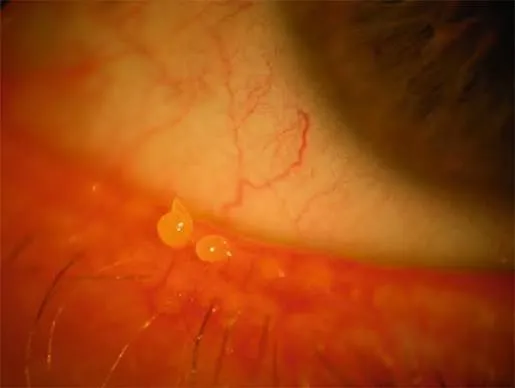
Can Demodex cause blepharitis?
Yes. Demodex is a microscopic mite that lives at the base of the lashes; in excess, it maintains persistent blepharitis with waxy sleeves around the lashes. The ophthalmologist identifies it with the slit-lamp and prescribes a specific treatment (wipes or gel with tea tree oil, or targeted treatment).
Related reading
Red eyelids that itch or stick together?
An eyelid examination at the Noisy-le-Grand practice identifies blepharitis and sets up the right care.
The Grand Paris Ophtalmologie practice in Noisy-le-Grand provides consultations, screening and surgery for patients from neighbouring towns: