

Medical laser: three lasers, at the practice, without hospital admission
Secondary cataract, glaucoma, retinal tears: many laser treatments are done directly at the practice, in a few minutes, under simple drop anaesthesia. By Dr Chetrit and Dr Srour.
YAG laser · capsulotomy
After cataract surgery, the thin capsule that supports the implant can become cloudy over time: this is “secondary cataract”, which blurs vision again. The YAG laser opens it in a few minutes, painlessly: vision becomes clear again immediately or within a few hours, permanently.
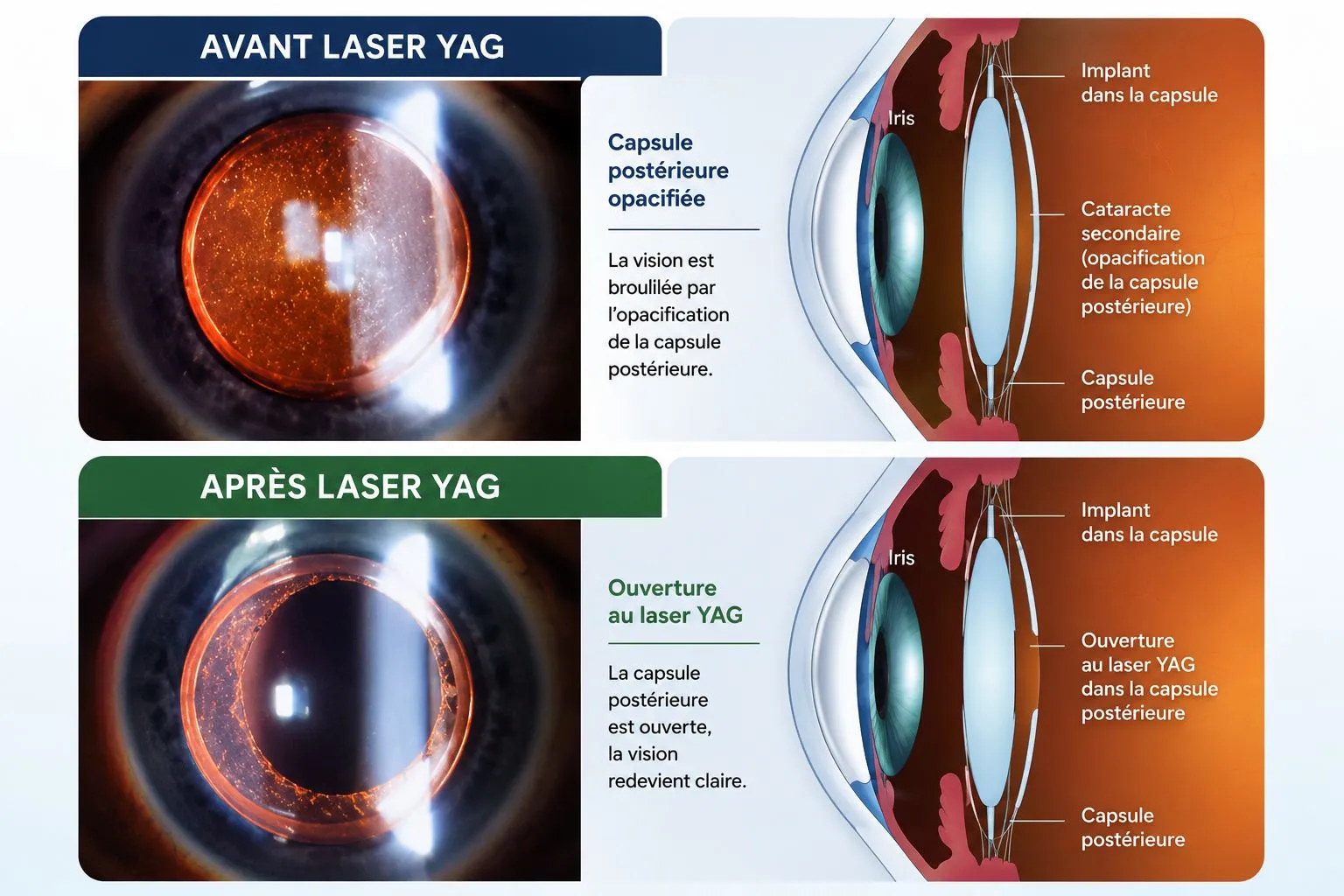
1. The pupil is dilated with drops (allow 20-30 minutes), then the eye is numbed with eye drops.
2. Seated at the slit lamp, with no contact with the eye, you look at a light: the laser opens the capsule in 2 to 5 minutes. You will notice small flashes and clicks, without pain.
3. You leave straight away; vision stays blurred and dazzled for a few hours (do not drive). Small floaters may appear for a few days, while the capsule fragments are absorbed. An anti-inflammatory eye drop is prescribed for a few days, and clear vision returns within a few hours.
YAG laser · peripheral iridotomy
In patients with a narrow angle, predisposed to acute angle-closure glaucoma, the YAG laser creates a micro-opening in the iris that restores the circulation of aqueous humour and permanently protects against an attack. A preventive procedure of a few minutes, carried out at the practice on both eyes.
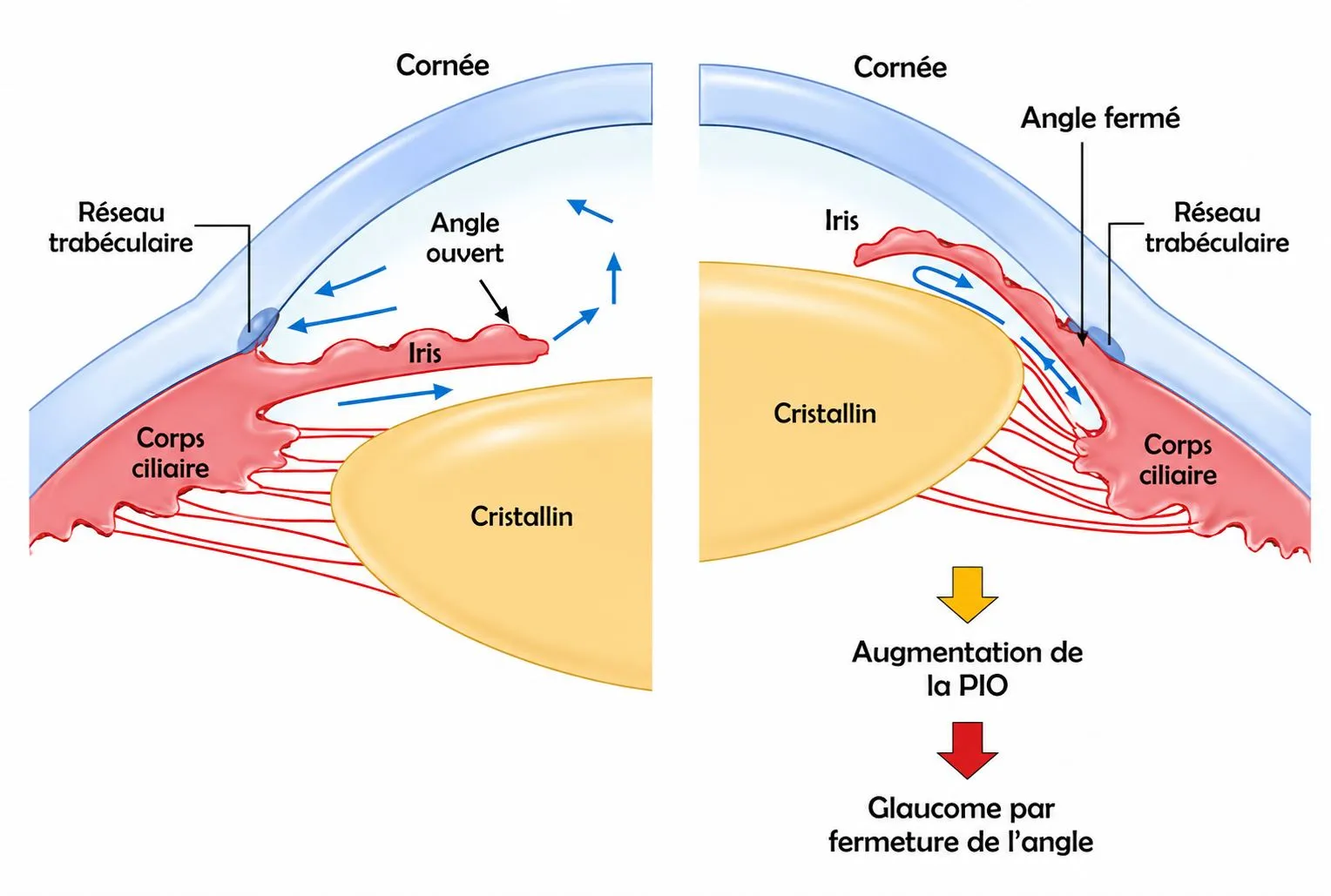
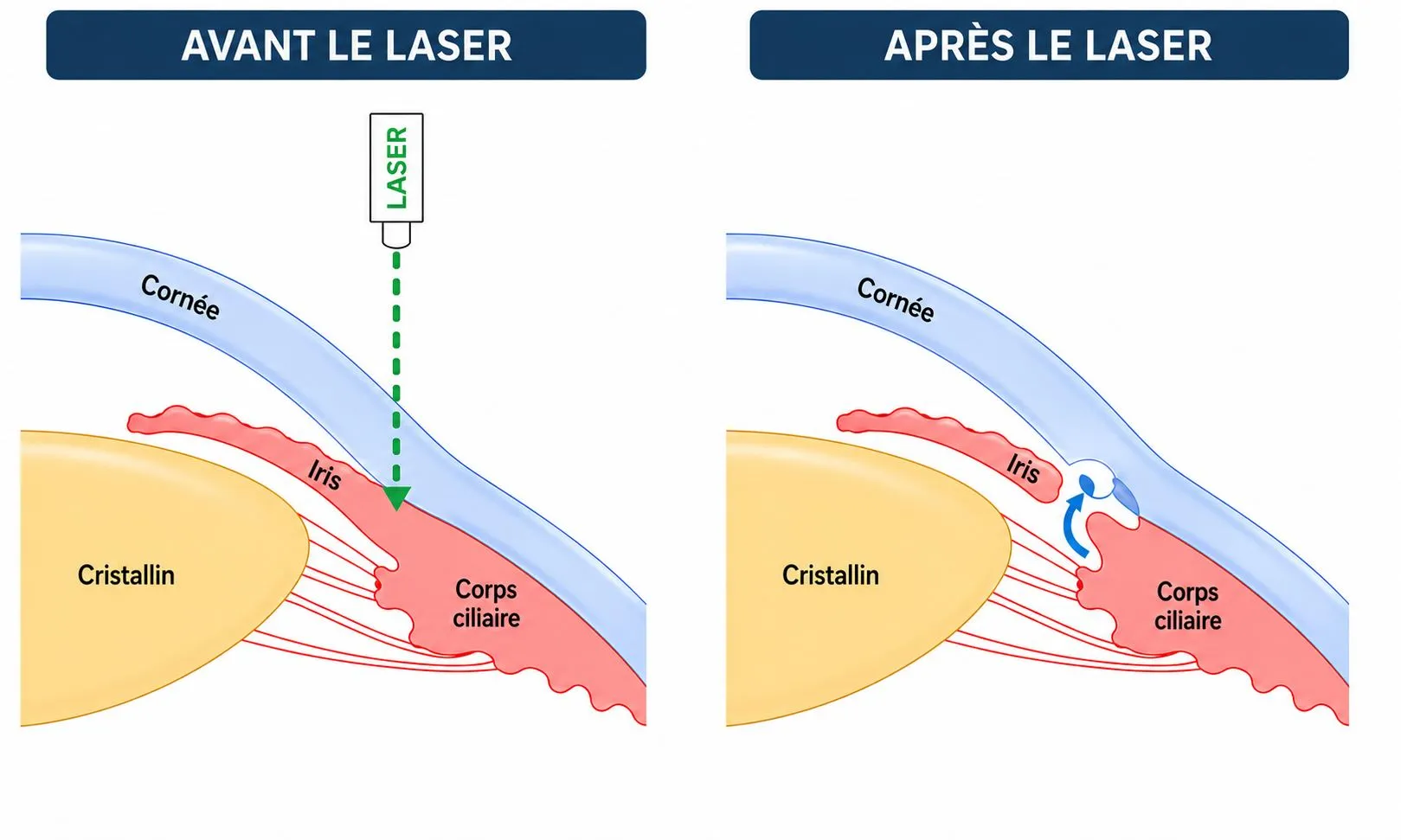
1. Drops constrict the pupil (they may cause a mild, temporary headache), then the eye is numbed with eye drops.
2. At the slit lamp, with a contact lens, the laser creates the micro-opening in the iris in a few pulses. A brief stinging sensation is possible.
3. Eye pressure is sometimes checked within the hour; an anti-inflammatory eye drop is prescribed for a few days. Both eyes are treated, often in two sessions close together.
SLT laser: the laser treatment for glaucoma
Selective trabeculoplasty stimulates the eye's natural filter (the trabecular meshwork) to improve the drainage of aqueous humour and lower eye pressure by 20 to 30%.
Painless and repeatable because it leaves no scar, recommended as a first-line treatment by the European Glaucoma Society, it can reduce or even replace eye drops in some patients. Learn more on our glaucoma page.
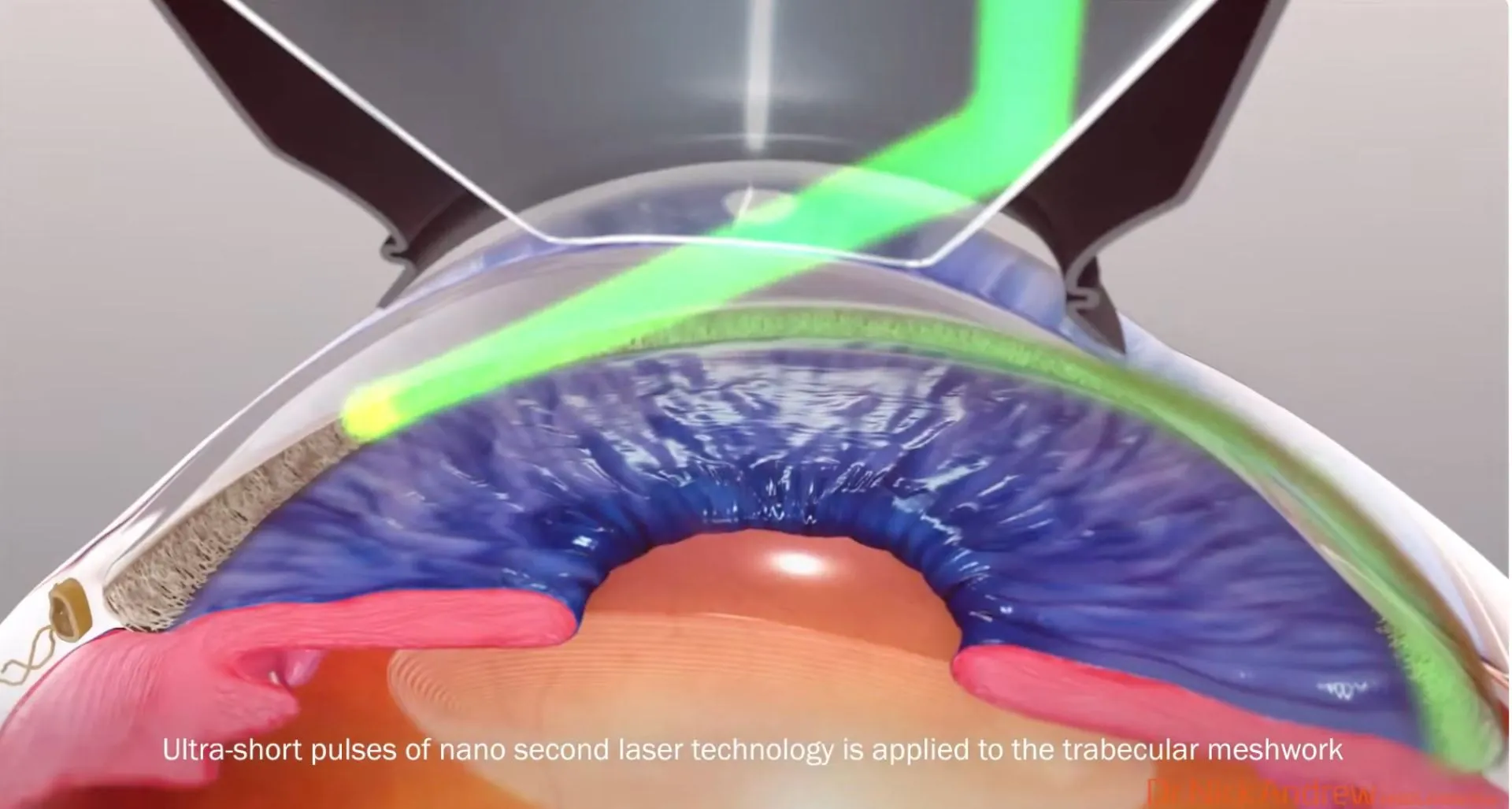
1. Simple drop anaesthesia, no dilation.
2. At the slit lamp, a special (gonioscopic) lens placed on the eye allows the trabecular meshwork to be targeted: about a hundred painless pulses in around 5 minutes.
3. You leave straight away, continuing your usual eye drops. The effect builds up over 4 to 6 weeks: pressure is checked later, and treatment is adjusted according to the result.
Argon laser: protecting the retina
Sealing tears — a retinal tear or area of weakness (common in high myopia) can progress to retinal detachment. The Argon laser creates a scar barrier around the lesion that locks it in place, an essential preventive treatment carried out as soon as the lesion is found, sometimes as an emergency.
Panretinal photocoagulation — in diabetic retinopathy, the Argon laser treats the ischaemic areas of the retina to prevent the growth of abnormal vessels.
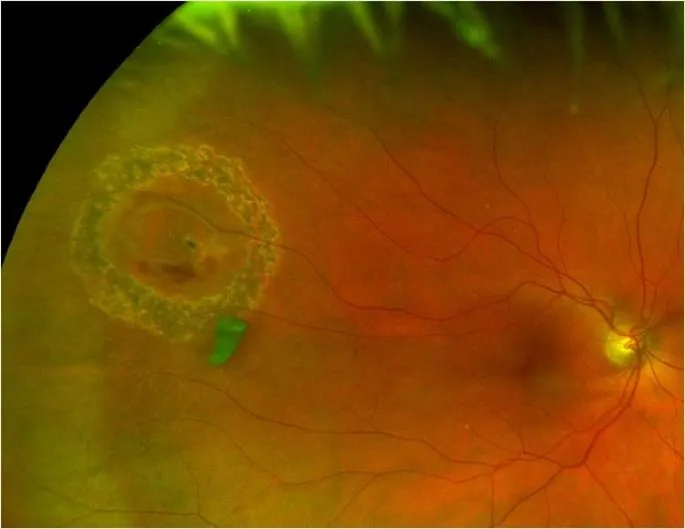
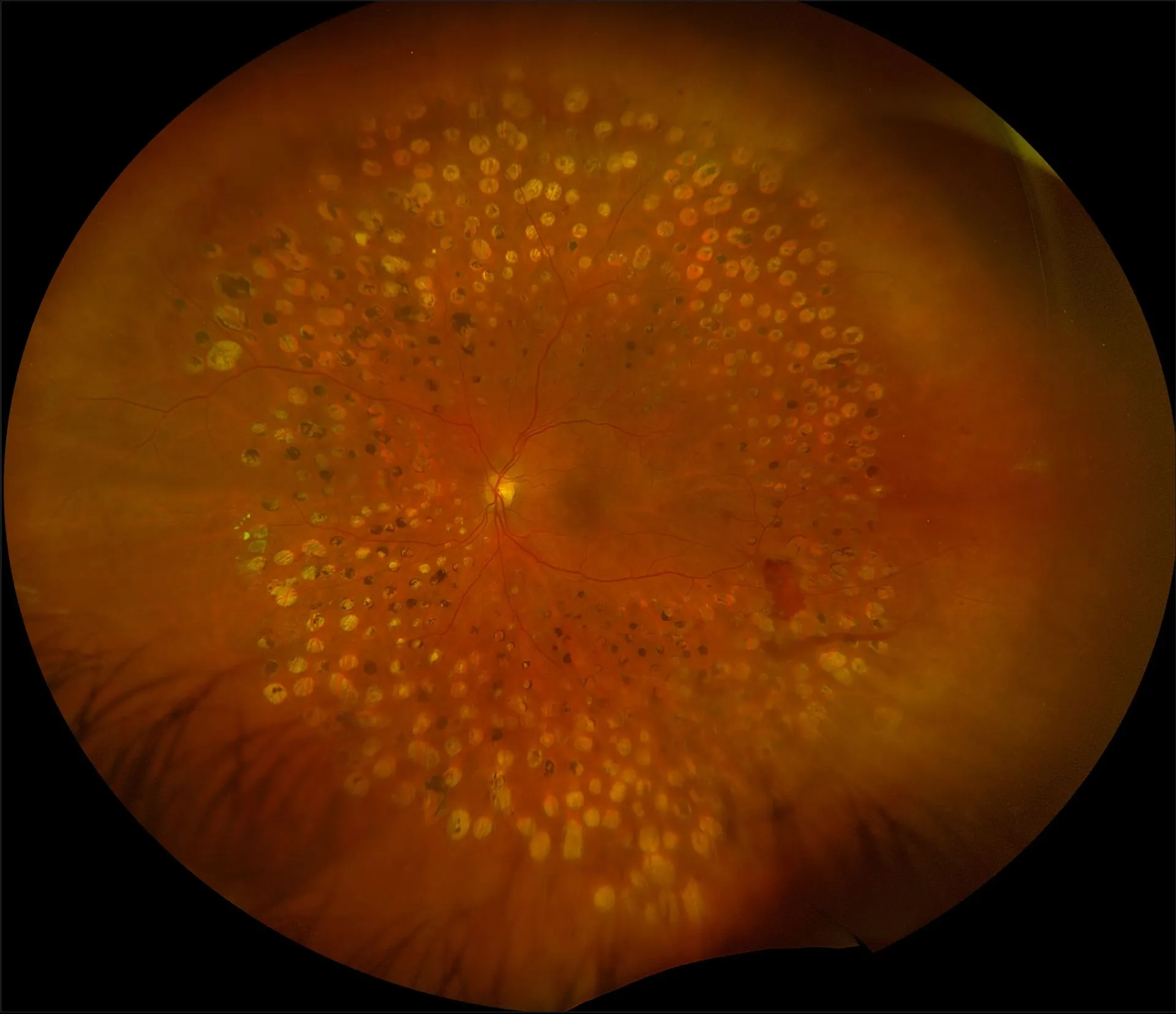
1. The pupil is dilated, then the eye is numbed with eye drops.
2. At the slit lamp, with a contact lens, the laser applies the spots over 10 to 20 minutes: dazzling, and sometimes slightly sensitive in the periphery. For panretinal treatment in diabetes, several sessions are spread over a few weeks.
3. Dazzle persists for a few hours: do not drive, and arrange for someone to accompany you. A fundus check then verifies healing of the barrier.
Three state-of-the-art lasers, on site
YAG, SLT and Argon are part of the practice's diagnostic and treatment equipment: diagnosis, treatment and follow-up all take place in the same location, with no delay or trip to Paris.
Medical laser in Noisy-le-Grand and eastern Paris
The Grand Paris Ophtalmologie practice carries out YAG, SLT and Argon lasers on site, for patients from Noisy-le-Grand and neighbouring towns (93, 94, 77): Bry-sur-Marne, Villiers-sur-Marne, Champs-sur-Marne, Neuilly-sur-Marne, Gournay-sur-Marne, Noisiel, Torcy, Chelles, Gagny and Marne-la-Vallée, as well as Le Perreux-sur-Marne, Nogent-sur-Marne, Fontenay-sous-Bois, Vincennes, Saint-Maur-des-Fossés, Créteil and Montreuil.
Sessions are carried out by Dr Yaïr Chetrit and Dr Mayer Srour, with emergencies (retinal tear, acute glaucoma attack) seen the same day.
Medical laser: your questions
Answers from Dr Yaïr Chetrit and Dr Mayer Srour, ophthalmologists in Noisy-le-Grand.
Is the laser painful?
No: the session is carried out under drop anaesthesia, seated at the slit lamp, and lasts from a few seconds to a few minutes. Temporary dazzle is possible afterwards.
Do I need to be admitted to hospital?
No: all three lasers are carried out directly at the practice, without an operating theatre. You leave immediately after the session, ideally accompanied.
What is secondary cataract?
Clouding of the capsule that supports the implant, sometimes months or years after cataract surgery. The YAG laser opens it in a few minutes, and vision becomes clear again, permanently.
What is the SLT laser used for?
To lower eye pressure in glaucoma (by 20 to 30%), by stimulating the eye's natural filter. Painless and repeatable, it can reduce or even replace eye drops.
What is the Argon laser used for?
To seal retinal tears before they progress to detachment, and to treat the ischaemic areas of diabetic retinopathy.
Can I drive after a session?
This is not recommended: the pupil is often dilated and dazzle can last a few hours. Arrange for an accompanying person; vision returns to normal the same day or the next day.
Are lasers reimbursed?
Yes: YAG, SLT and Argon are medical procedures covered by the French national health insurance (Assurance Maladie), unlike refractive surgery, which is considered elective.
Floaters, flashes of light: should I seek urgent care?
Yes. The sudden appearance of floaters or flashes of light can signal a retinal tear, to be treated with laser without delay. The practice sees these emergencies the same day: 01 85 10 57 00.
Related reading
Have you been prescribed laser treatment?
Everything takes place at the Noisy-le-Grand practice: diagnosis, session and follow-up.
The Grand Paris Ophtalmologie practice in Noisy-le-Grand provides consultations, screening and surgery for patients from neighbouring towns: