

Your first consultation, no surprises
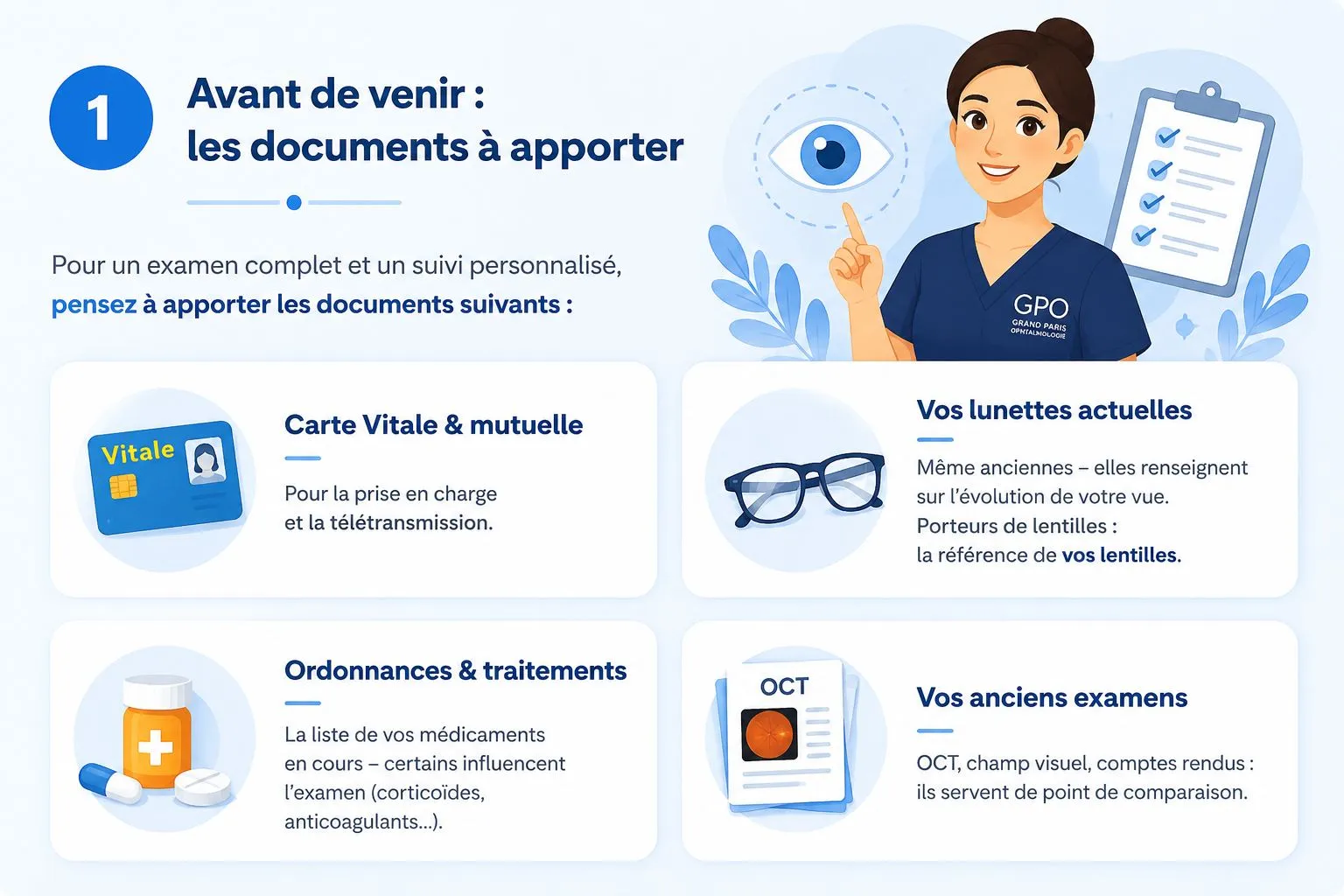
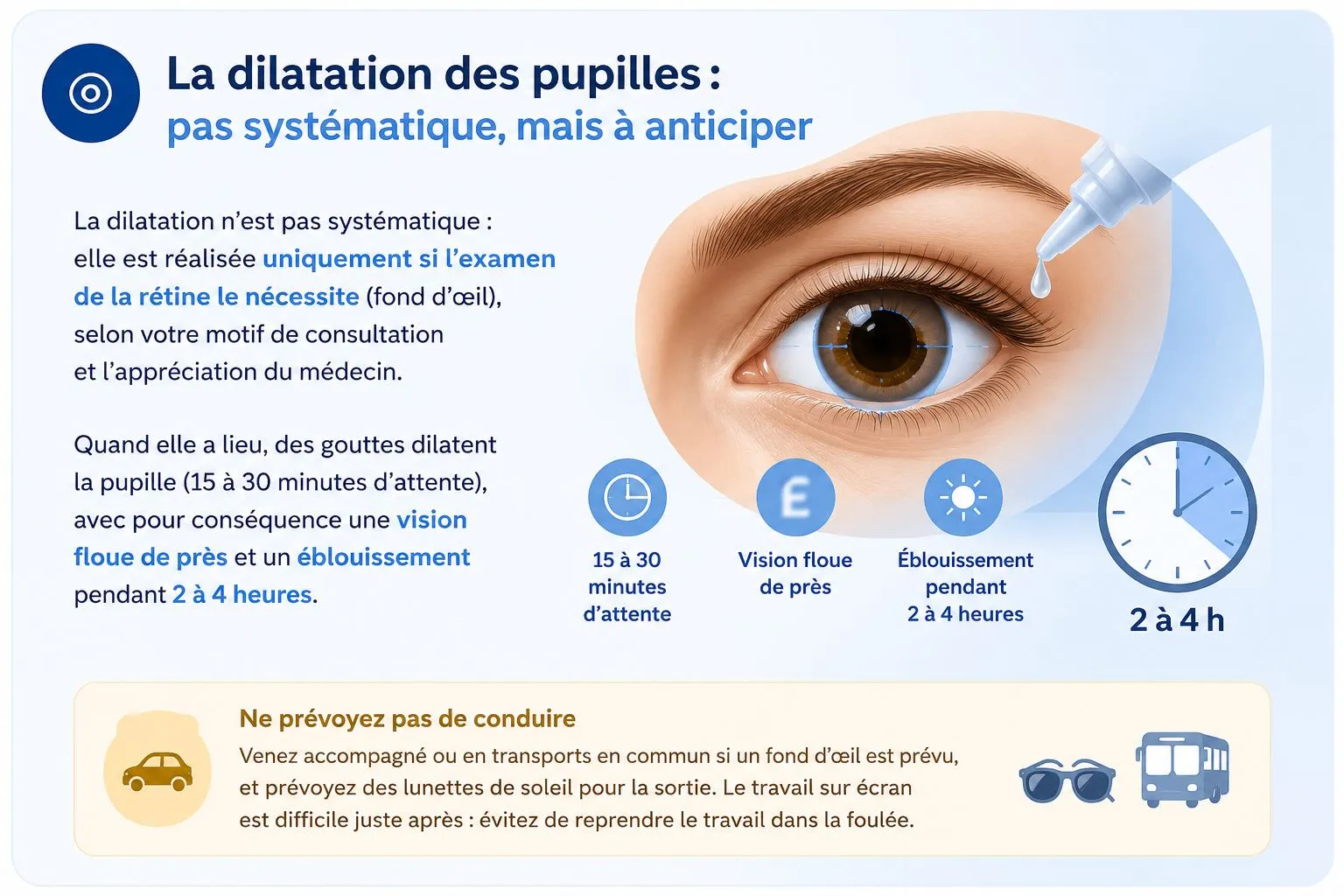
For your first consultation, bring your carte Vitale (French health insurance card), your current glasses or prescriptions and any reports you may have. Depending on your needs, the consultation includes refraction, eye pressure and imaging examinations, all carried out on site. Allow 1 h to 1 h 30, and possible difficulty driving if your pupils are dilated. See also our fees and reimbursements.
Documents to bring, how the examinations go, dilation, duration: everything you need to know to come calm and well prepared.

How the consultation goes
On arrival, you are first seen by the orthoptist, who carries out the preliminary measurements: automatic refraction (the measurement of your eyesight), eye pressure and visual acuity. Depending on the reason for your visit, additional examinations are done straight afterwards, on the practice’s technical facilities: OCT, retinal photographs, visual field, topography…
Next comes the examination with your ophthalmologist — Dr Chetrit or Dr Srour — who interprets everything, explains the results to you and answers your questions.
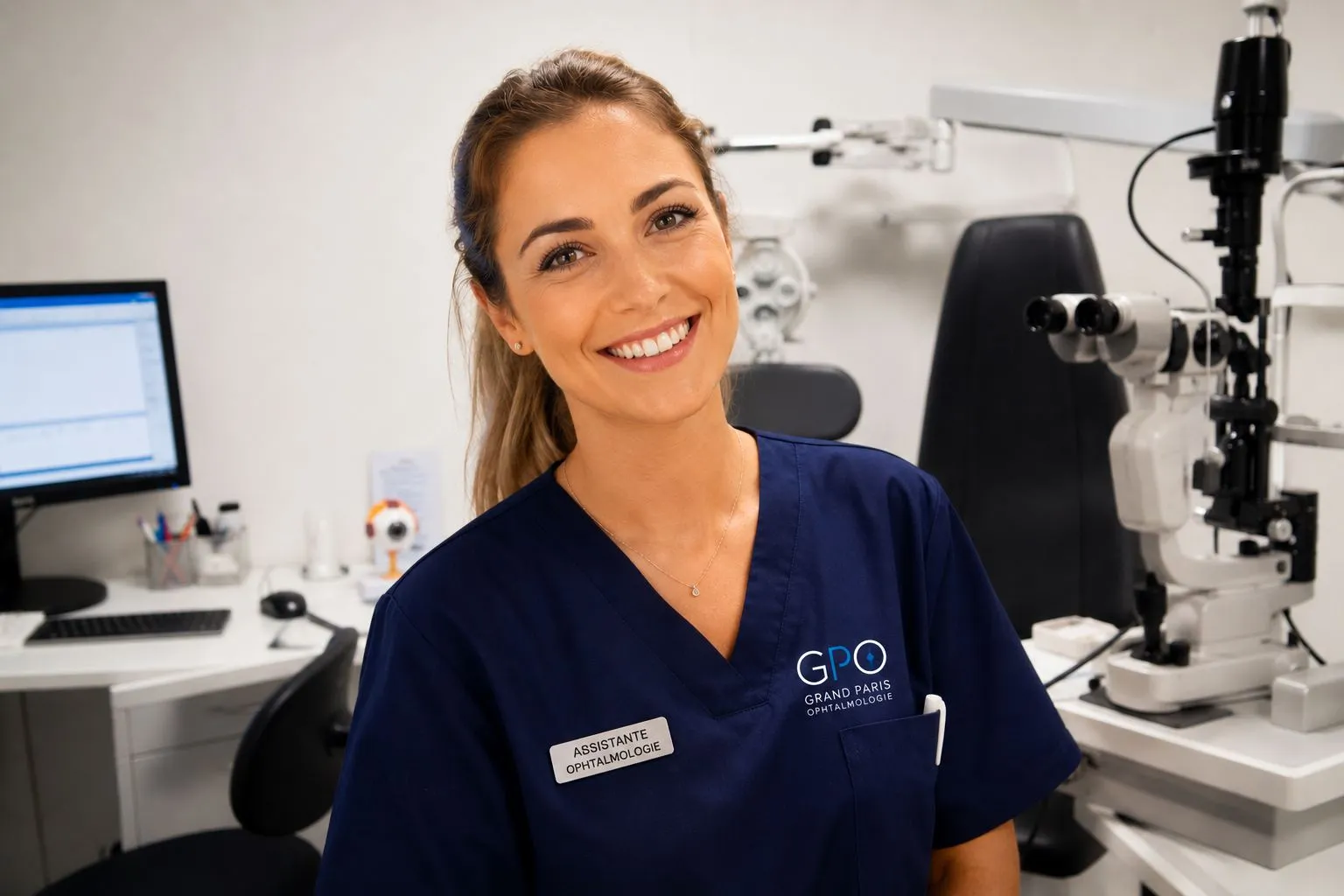
The orthoptist is a paramedical healthcare professional, a specialist in the screening, rehabilitation and assessment of vision. They are trained over 3 years at university (orthoptist certificate of competence, accessible after the baccalauréat via health studies), with solid training in anatomy, ocular physiology and visual assessment examinations.
At the practice, they work as a pair with your ophthalmologists: they carry out the measurements and technical examinations (refraction, pressure, OCT, visual field…), which allows the doctor to devote all their time to analysis, diagnosis and your questions. It is this teamwork that makes a complete assessment possible in a single visit.
Your questions before you come
Which documents should I bring?
Carte Vitale (French health insurance card) and mutuelle (supplementary health insurance) card, current glasses, prescriptions and a list of medicines, previous eye examinations if you have any. Contact lens wearers: the reference of your lenses.
Will I be able to drive afterwards?
Not if your pupils are dilated: blurred vision and glare for 2 to 4 hours. Come accompanied or by public transport, with sunglasses.
How long does it take?
About 1 hour to 1h30: preliminary measurements, any additional examinations (all on site), dilation, then the consultation with the doctor.
Do I need a referral from my GP?
No: ophthalmology is direct access, you are reimbursed as usual without going through your médecin traitant (GP).
Ready for your consultation?
Book an appointment online — emergencies are seen the same day, without an appointment.
The Grand Paris Ophtalmologie practice in Noisy-le-Grand provides consultations, screening and surgery for patients from neighbouring towns: