
Cataract surgery: what to expect
Short, painless and performed as a day case: cataract surgery is one of the most common operations in the world. Here is how it goes, step by step, from the consultation to recovery.
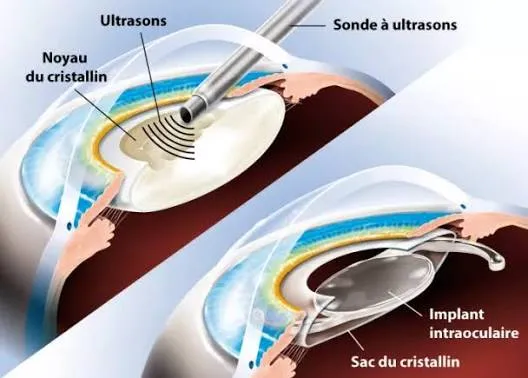
A cataract is the gradual clouding of the lens, the natural lens of the eye. Surgery is one of the most commonly performed and safest operations in the world: it consists of replacing this lens with a permanent clear implant.
Before: the consultation and measurements
First, we confirm that the cataract is indeed responsible for your symptoms (blurred vision, glare, dull colours). Precise measurements of the eye by biometry make it possible to calculate the tailor-made implant — this is also when you choose, with the surgeon, an implant that corrects distance vision, or both distance and near vision.
On the day of the operation
The operation is performed as a day case (admission and discharge on the same day) and generally lasts 10 to 20 minutes per eye. It is done under simple local anaesthesia with eye drops: the eye is completely numbed, you do not see the instruments and you feel no pain.
- the clouded lens is broken up with ultrasound and then aspirated (phacoemulsification);
- the folded implant is slid into the natural capsule, where it unfolds;
- no stitches are needed: the micro-incision closes on its own.
Afterwards: a quick recovery
Vision generally clears within a few days. You need to use eye drops for about 3 to 4 weeks and, at first, avoid rubbing the eye, swimming pools and dust. Most everyday activities resume very quickly.
And afterwards, never a cataract again
The implant does not cloud over: the cataract does not “grow back”. Occasionally the capsule that holds it becomes cloudy after some months or years — a simple laser (YAG capsulotomy) session, painless and lasting a few minutes, then restores vision.