
Screens and children’s eyes: what to do?
No, screens do not permanently damage the eyes — but they do contribute to eye strain and myopia. Good habits, age by age, and when to have the first examination.
Screens do not “burn” children's eyes, but prolonged use, especially up close and indoors, encourages two very real things: eye strain and above all the progression of myopia. Childhood myopia is rising sharply worldwide.
The real issue: progressing myopia
Spending a lot of time on close-up tasks (screens, reading) and little time outdoors speeds up the lengthening of the eye, and therefore myopia. Studies agree on one key point: daylight is protective. About 2 hours of outdoor activity a day is recommended, whatever the sport or game.
Simple guidelines by age
- Under 3 years: no screens, or the bare minimum;
- 3–6 years: very limited use, supervised, never in the bedroom;
- school-age children: favour breaks and fresh air, with screens off at least 1 hour before bedtime.
Warning signs
See a doctor if your child sits close to the television or notebook, squints, complains of headaches, blinks or rubs their eyes often, or if one eye seems to turn (strabismus). Uncorrected visual problems can affect learning.
The first eye examination
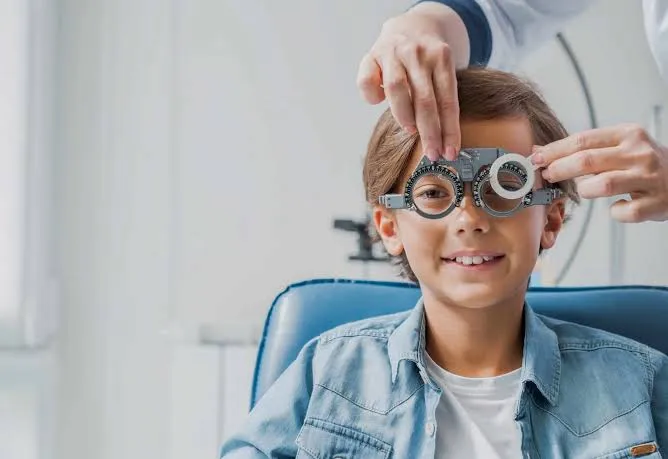
An examination is recommended around the age of 3 for all children — a key age for detecting amblyopia (“lazy eye”) and strabismus — then before starting primary school (CP). Earlier in cases of prematurity or a family history of strong prescriptions. The full screening schedule details each age.
Correcting childhood myopia is no longer limited to glasses: myopia-control lenses or low-dose eye drops can slow its progression. We discuss these case by case during the consultation.