
Blue-light glasses: useful or just marketing?
Offered as an option by almost every optician, “blue-light” glasses promise to protect your eyes from screens, reduce eye strain and improve sleep. What do the studies really say? A straightforward look.
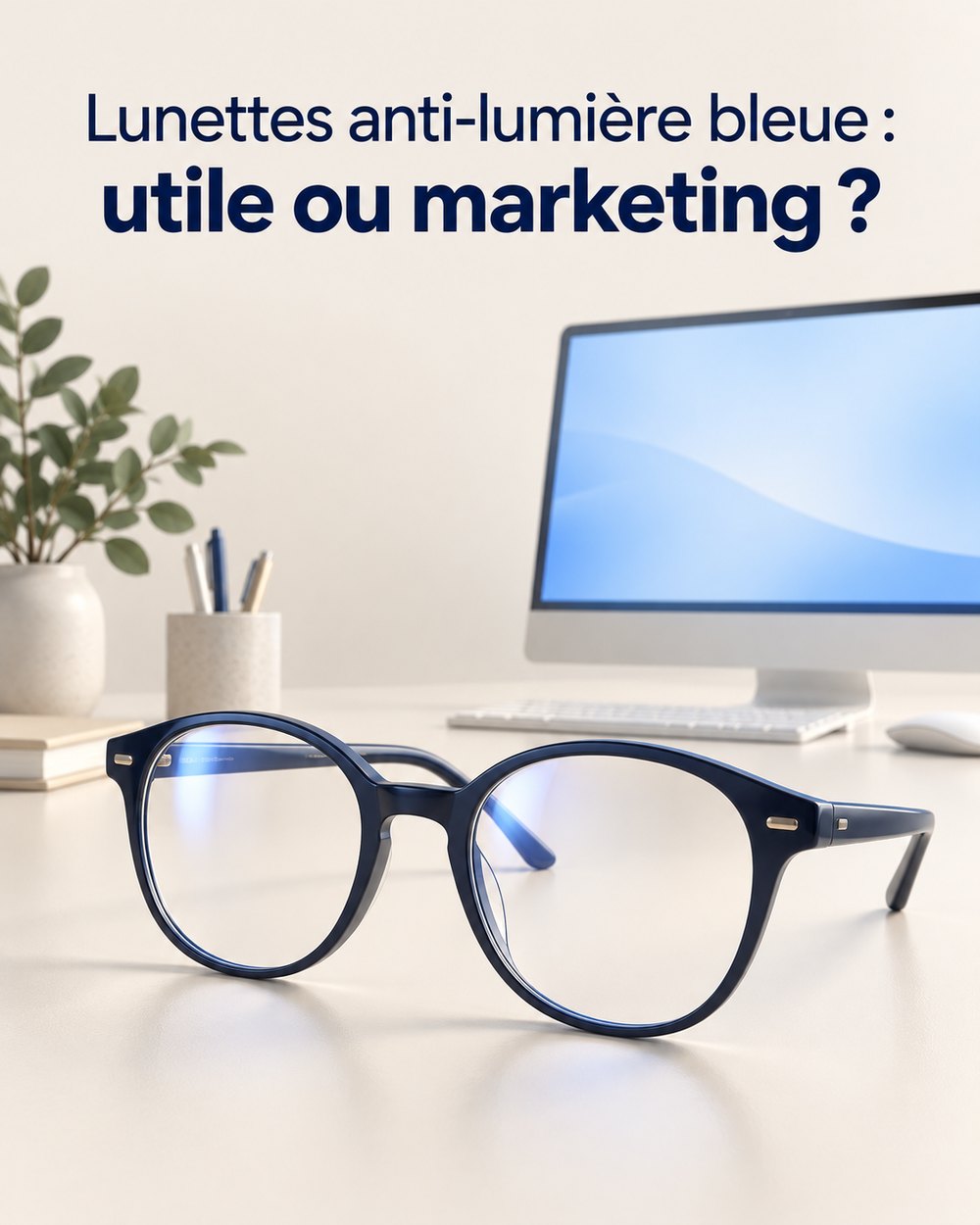
At the levels emitted by screens, blue light does not damage the retina, and studies show no clear benefit of blue-light lenses on eye strain. The real cause of fatigue in front of screens is mainly dryness (we blink less) and the effort of focusing, not blue light.
What exactly is blue light?
Blue light is a normal component of visible light. By far its most important source is the sun: in a day outdoors, your eyes receive much more of it than from several hours of screen use. Screens, phones and LEDs emit a comparatively tiny amount. This helps put concerns into proportion.
Do filtering lenses protect the retina?
To date, no study has shown that blue light from screens damages the retina at everyday exposure levels. The fears come from experiments on cells or animals, at intensities far higher than those of a phone or computer. The American Academy of Ophthalmology does not recommend blue-light lenses to “protect” the eyes from screens.
Do they reduce eye strain?
This is the most common promise, and the least well supported. A Cochrane systematic review published in 2023 concluded that blue-light-filtering lenses provide no demonstrated benefit for screen-related eye strain. The reason is simple: this fatigue does not come from blue light, but from dry eye (in front of a screen, we blink 2 to 3 times less) and from the constant effort of focusing.
And for sleep?
This is the only area where blue light plays a real role: in the evening, it can delay the secretion of melatonin and push back falling asleep. But the specific effect of the lenses remains modest and inconsistent in studies. Reducing screen use before bedtime, or turning on your phone's night mode, is at least as effective, and free.
What really helps in front of screens
A few habits have proven their worth: the 20-20-20 rule (every 20 minutes, look at something 6 metres away for 20 seconds), blinking deliberately, and above all wearing a suitable correction; an inaccurate correction tires the eyes far more than blue light. If your eyes burn or sting, it is often dryness that needs treating. If discomfort persists, an examination will sort it out.
Should you buy a pair?
There is no risk in wearing blue-light lenses, but little proven benefit. If you already wear them and feel more comfortable, there is no need to change. However, they are not essential, and above all not a substitute for an eye examination: persistent fatigue deserves an assessment (correction, ocular surface). In children, the priority is not the filter but screen time and vision screening.