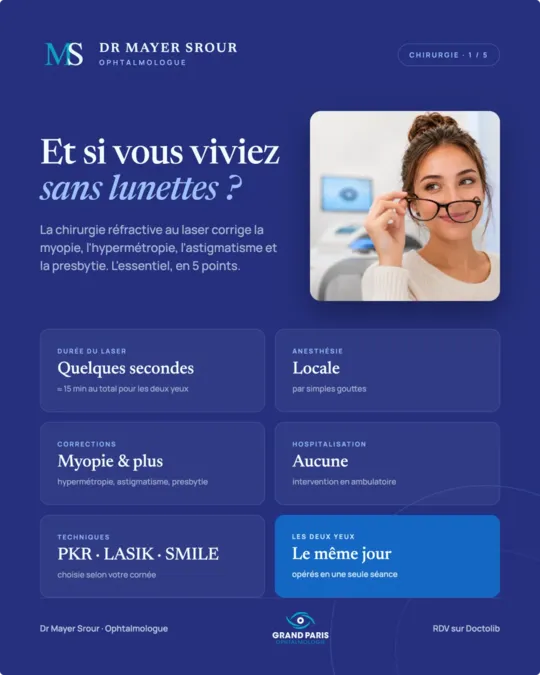
Itchy, sticky eyelids? Blepharitis in 5 images
A chronic inflammation of the edge of the eyelids, uncomfortable and recurrent — but very well controlled. Understanding it, recognising it, identifying the causes and the long-term care in three steps: the carousel published on Instagram, in 5 images.
Swipe, or use the arrows. The text of each image is reproduced below.
The carousel, image by image
The text of each carousel page, to read at your leisure or to find a specific piece of information.
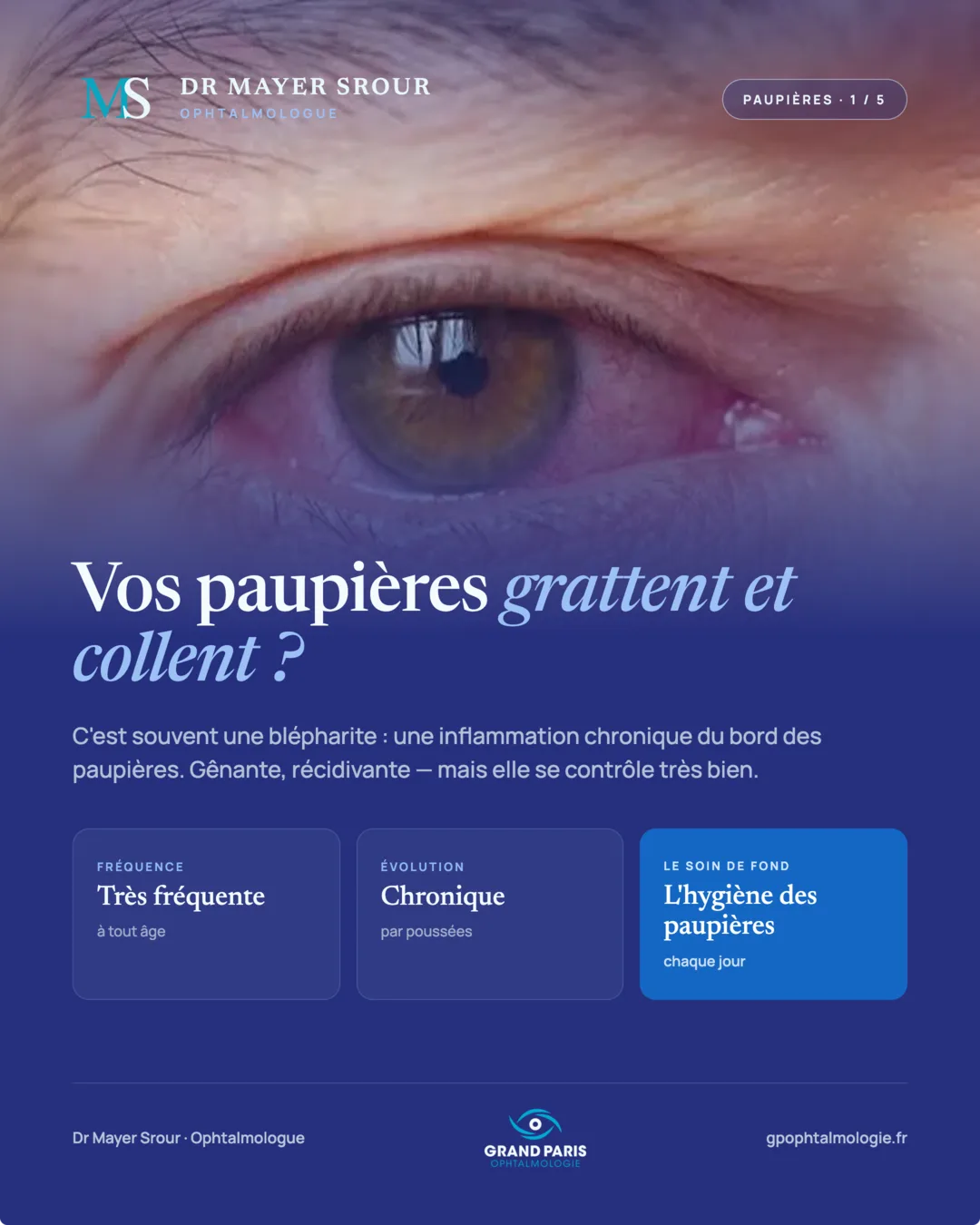
Itchy, sticky eyelids?
It is often blepharitis: a chronic inflammation of the edge of the eyelids. Uncomfortable, recurrent — but very well controlled.
Frequency: very common, at any age. Course: chronic, with flare-ups. Long-term care: eyelid hygiene, every day.
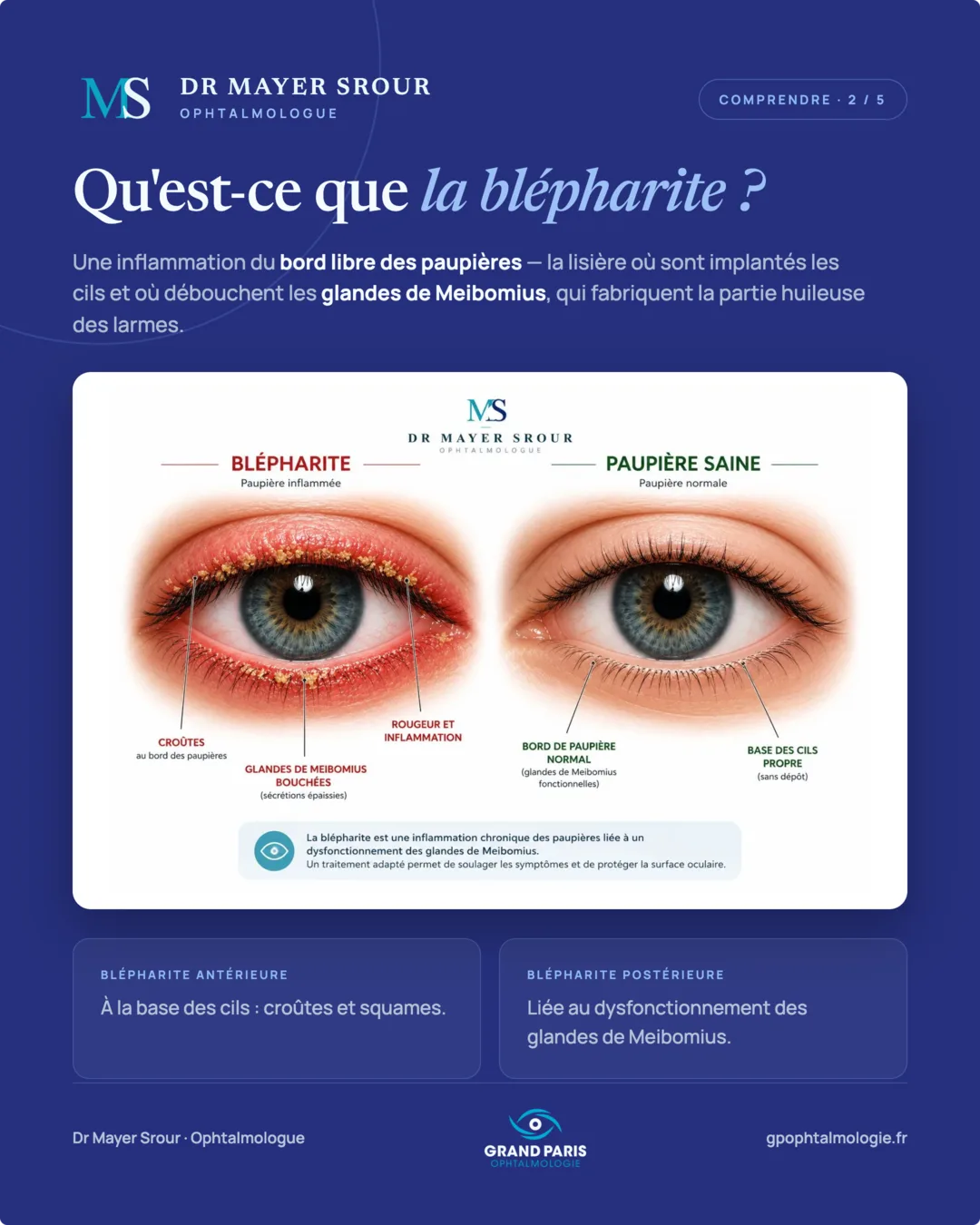
What is blepharitis?
An inflammation of the free edge of the eyelids — the margin where the lashes grow and where the meibomian glands open, which produce the oily part of the tears.
Anterior blepharitis: at the base of the lashes, crusts and flakes. Posterior blepharitis: linked to meibomian gland dysfunction.
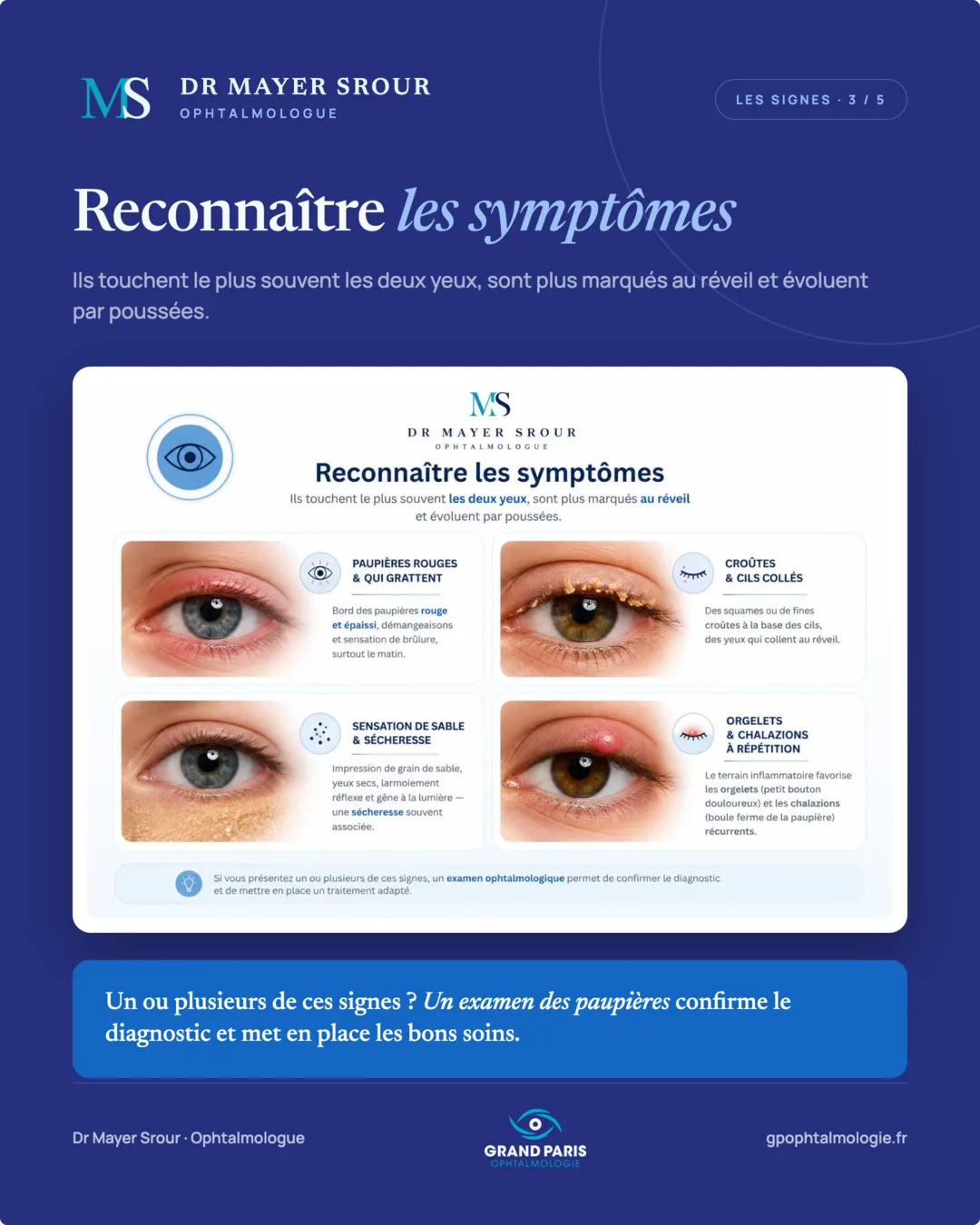
Recognising the symptoms
They most often affect both eyes, are worse on waking and come in flare-ups: red, swollen eyelids, itching, burning, lashes stuck together on waking, crusts at the base of the lashes, a gritty sensation, watering eyes.
One or more of these signs? An eyelid examination confirms the diagnosis and sets up the right care.
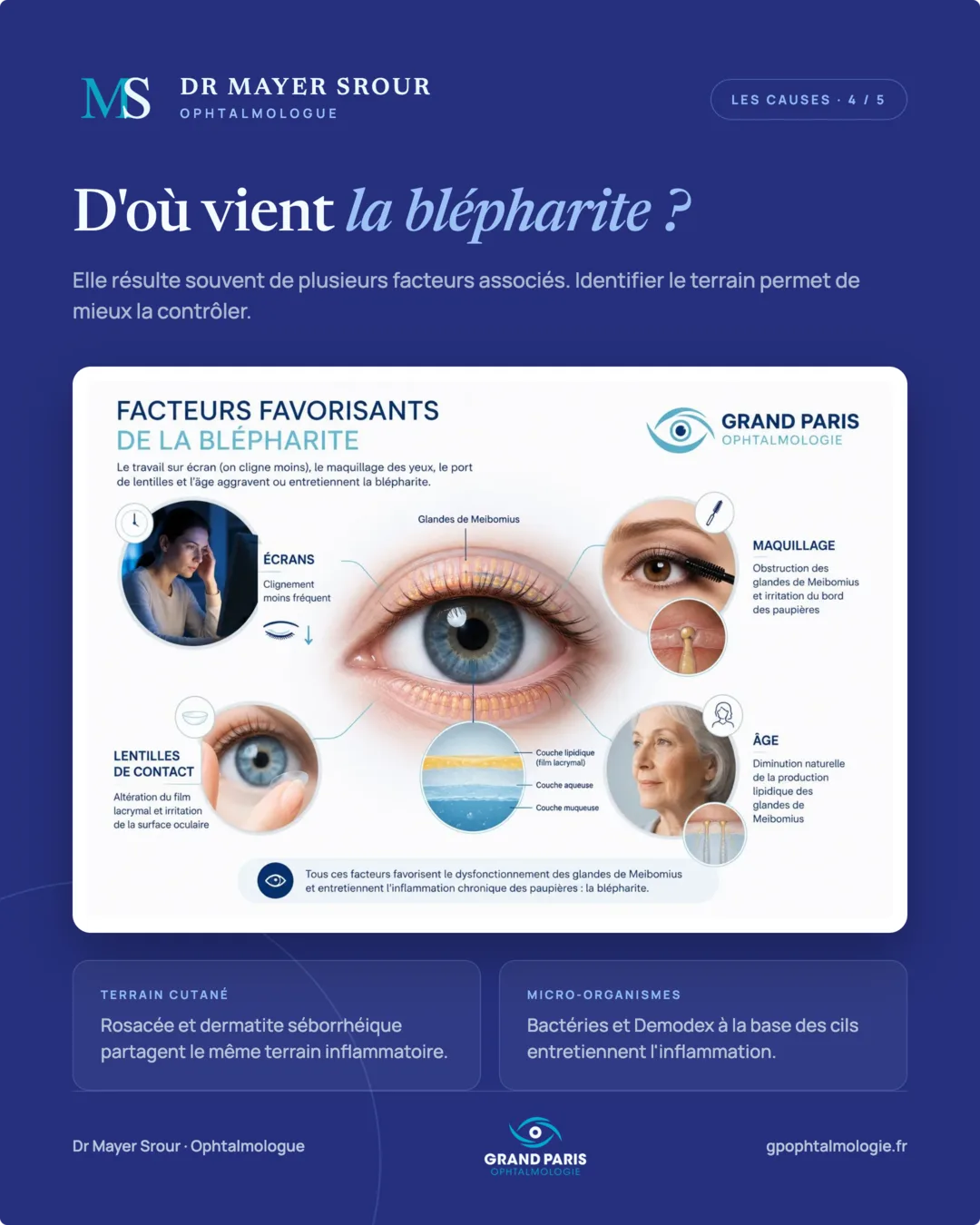
Where does blepharitis come from?
It often results from several factors combined. Identifying the underlying cause makes it easier to control.
Skin condition: rosacea and seborrhoeic dermatitis share the same inflammatory background. Micro-organisms: bacteria and Demodex at the base of the lashes keep the inflammation going.
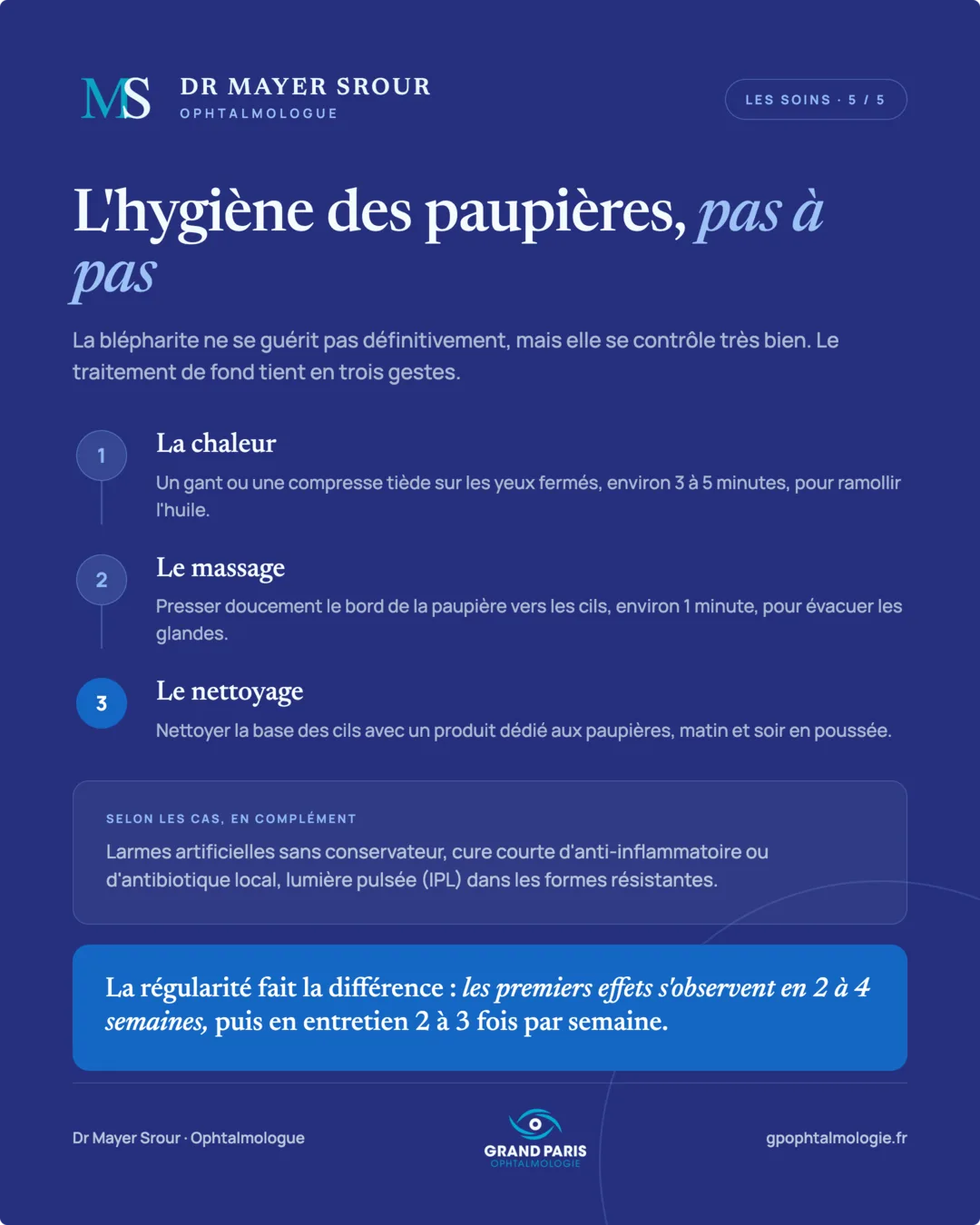
Eyelid hygiene, step by step
Blepharitis cannot be cured for good, but it is very well controlled. Long-term treatment comes down to three steps.
1 · Warmth: a warm flannel or compress over closed eyes, for about 3 to 5 minutes, to soften the oil. 2 · Massage: gently press the edge of the eyelid towards the lashes, for about 1 minute, to express the glands. 3 · Cleaning: clean the base of the lashes with a product designed for eyelids, morning and evening during a flare-up.
Depending on the case, in addition: preservative-free artificial tears, a short course of anti-inflammatory or topical antibiotic, intense pulsed light (IPL) in resistant forms.
Regularity makes the difference: the first effects are seen within 2 to 4 weeks, then maintenance 2 to 3 times a week.
Going further
This carousel summarises the essentials in a few images. The subject is covered in more depth on the dedicated page of the website: Blepharitis: the practice's complete page.